


Chat with MASLD AI

Hi, I am MASLD AI.
Suggested Questions :
MASLD AI 02:20 AM

 September 2026

Thank you to Madrigal for their support on this FAQ Video Module.
In this FAQ video, Alison Moe, PA-C, discusses how alcohol consumption impacts the evaluation and progression of metabolic dysfunction–associated steatohepatitis (MASH) and why accurate assessment is critical in clinical practice. The discussion reviews the synergistic effects of alcohol and metabolic liver disease on fibrosis progression, explains current alcohol intake thresholds associated with increased risk, and outlines how biomarkers such as phosphatidylethanol (PEth) can provide objective insight into recent alcohol use. Designed for APPs and clinicians, this practical overview highlights how to differentiate MASH, alcohol-related liver disease (ALD), and MetALD to ensure accurate diagnosis, documentation, and treatment decisions.
Related FAQ

Common Questions From Community GI About MASH With Maribeth Capuno
 September 2025
In this educational session, Maribeth Capuno, Adult Nurse Practitioner specializing in hepatology at the Richmond VA Medical Center, answers two of the most common questions clinicians face about Metabolic Associated Steatotic Liver Disease (MASLD) and Metabolic Associated Steatohepatitis (MASH). She explains how elevated liver enzymes—particularly when ALT is greater than AST—can be an early signal to investigate further, and why obtaining a baseline ultrasound and, when possible, a FibroScan are key steps in assessing liver health. Maribeth also covers how to determine the right time to repeat non-invasive liver testing, especially in patients with higher-risk metabolic conditions such as diabetes, and highlights the role of tests like Fib-4 and the ELF test in identifying fibrosis risk. Whether you’re a healthcare provider managing patients with liver disease or someone seeking to understand the latest non-invasive approaches to MASLD and MASH, this video provides practical guidance on monitoring, testing frequency, and risk assessment strategies that can improve patient care and outcomes.
Watch Now
Common Questions From Primary Care Providers About MASH
July 2025
In this informative session, Jennifer Geremia, PA-C, a seasoned gastroenterology physician assistant in tertiary care Boston, addresses some of the most common questions primary care providers have about identifying and managing patients with fatty liver disease, MASLD (Metabolic dysfunction-associated steatotic liver disease), and MASH (Metabolic-associated steatohepatitis). Jennifer highlights the importance of using FIB-4 as a first-line non-invasive test (NIT) in high-risk patients with diabetes, obesity, or other metabolic conditions—noting how easily this tool can be integrated into routine labs via the EMR. She underscores that the liver is often overlooked in chronic disease management and makes a strong case for routine fibrosis screening alongside cardiovascular and diabetes evaluations. The talk also dives into actionable next steps after FIB-4 testing, including elastography, ELF testing, and referrals to GI when needed. Jennifer closes by discussing realistic lifestyle intervention goals—especially the importance of 7–10% weight loss for meaningful reductions in steatosis and fibrosis risk. This session is a must-watch for PCPs, APPs, and clinicians managing metabolic comorbidities and seeking practical, evidence-based strategies for early MASH detection and management.
Watch Now

APP Insight: Common Questions from Patients About MASH
July 2025
In this impactful episode, Sherona Bau, NP from UCLA, addresses the most frequent and pressing questions patients ask after being diagnosed with MASLD (Metabolic dysfunction-associated steatotic liver disease) or MASH (Metabolic-associated steatohepatitis)—including concerns about life expectancy, risk of liver failure, liver cancer, and genetic impact on family members. She emphasizes the importance of risk stratification using non-invasive testing, particularly FibroScan®, to determine the extent of fat accumulation and liver fibrosis. Sherona explains that early identification of stage 2 or 3 fibrosis is critical, as treatment options are now available for these stages, offering hope for patients. She also stresses that MASLD is not just a liver disease—it's a systemic, metabolic condition—and encourages coordinated care with endocrinologists, cardiologists, and dietitians. Additionally, she discusses the hereditary nature of fatty liver and the importance of family screening, especially for children of affected individuals. This video offers clear, compassionate guidance for patients and providers navigating the complexities of fatty liver disease.
Watch Now
Common Questions From Primary Care Providers About MASH
November 2025
Join Renee Pozza, a hepatology nurse practitioner with over 25 years of experience, as she answers two of the most common questions advanced practice providers face in managing metabolic-associated steatotic liver disease (MASLD) and metabolic-associated steatohepatitis (MASH). In this educational discussion, Renee explains how primary care NPs and PAs can identify patients at risk for fatty liver disease, what non-invasive tests—such as FIB-4 and FibroScan®—can be performed in various clinical settings, and when it’s appropriate to refer patients to hepatology for further evaluation. She also outlines key lifestyle modification strategies for patients with MASLD or MASH, including weight management, exercise, diabetes control, and multidisciplinary support to reduce disease progression and improve long-term liver outcomes. For more expert guidance, educational videos, and clinical tools for APPs in hepatology, visit the MASLD Community Network to access additional resources and upcoming programs.
Watch Now

Misconceptions About Liver Health
November 2025
In this expert discussion, Chantil Jeffreys, FNP, from Gastro One in Memphis, Tennessee, addresses misconceptions patients and providers have about liver disease, particularly MASLD (metabolic dysfunction–associated steatotic liver disease) and MASH (metabolic dysfunction–associated steatohepatitis). She explains why cirrhosis is not only caused by alcohol use, how statins can actually be safe and beneficial for patients with MASLD/MASH, and why Tylenol—when used appropriately—remains a safe option even for individuals with advanced liver disease. With over 24 years of experience in hepatology, Chantil highlights the importance of patient education, myth-busting, and empowering both patients and primary care providers with accurate information. Watch now to better understand the realities of MASLD and MASH, the leading causes of liver transplants in the U.S., and learn how proper management can improve outcomes for patients with liver disease.
Watch Now

Common Questions from Patients About MASH
July 2025
In this focused episode, Suzanne Robertazzi, NP at the Washington DC VA, shares expert insights on how to prevent recurrence of MASH (Metabolic-associated steatohepatitis) and MASLD (Metabolic dysfunction-associated steatotic liver disease) in liver transplant recipients. Drawing on her experience caring for post-transplant veterans, Suzanne explains that MASH can return even after liver transplantation, making ongoing metabolic management essential. She outlines key strategies including tight blood sugar and blood pressure control, especially since transplant medications can contribute to hypertension. Suzanne also emphasizes the importance of introducing regular physical activity post-recovery and adopting a Mediterranean-style diet—while tailoring nutrition guidance to meet the needs of patients in urban settings with limited access to fresh foods. This video is a must-watch for transplant teams, hepatology providers, and patients seeking to extend the life and health of their new liver through evidence-based lifestyle and clinical interventions.
Watch Now
APP Insight: Common Questions from Primary Care Providers About MASH
June 2025
In this informative video, Michelle Barnett, PA-C, a hepatology expert based in Colorado Springs, answers frequently asked questions about elevated liver enzymes in the context of MASH (Metabolic Dysfunction–Associated Steatohepatitis) and MASLD (Metabolic Dysfunction–Associated Steatotic Liver Disease). She breaks down how to interpret common liver enzyme patterns—such as ALT greater than AST versus AST greater than ALT—and what these patterns may indicate, from MASH to alcohol-related liver disease and other potential causes like autoimmune hepatitis or drug-induced liver injury. Michelle outlines how to perform a thorough workup, including patient history, medication review, and physical exam findings, and emphasizes the importance of using tools like FIB-4 and abdominal ultrasound to assess for fibrosis and portal hypertension. The discussion also covers the clinical value of GGT, alkaline phosphatase, bilirubin, albumin, and platelets in evaluating liver function. Michelle shares practical guidance on when to refer patients to hepatology and how to monitor liver enzymes over time, particularly in those undergoing lifestyle changes or pharmacologic treatment. This comprehensive Q&A is an essential resource for providers managing patients with suspected or confirmed metabolic liver disease.
Watch Now
Common Questions From Primary Care Providers About MASH
October 2025
In this educational video, Anna Marie Hefner, CPNP, a hepatology nurse practitioner at the Southern California Liver and GI Centers, shares valuable insights for primary care providers managing patients with fatty liver disease. Anna Marie explains how her community-based practice collaborates with local clinicians to streamline care for patients with MASLD (Metabolic Associated Steatotic Liver Disease) and MASH (Metabolic Associated Steatohepatitis). She outlines a clear approach for evaluating patients with elevated liver enzymes and fatty liver, including when to use non-invasive testing (NITs) such as FibroScan and how to interpret fibrosis stages (F0–F4) to guide next steps in management. Anna Marie emphasizes that patients with early-stage fibrosis (F0–F1) can often be managed in primary care with regular weight monitoring, labs, and annual imaging, while those with advanced fibrosis (F3–F4) require hepatology referral for specialized care and cirrhosis management. She also discusses how her team supports community physicians—offering FibroScan services, consultative guidance, and direct communication to ensure patients receive coordinated, evidence-based care. This session is a practical resource for APPs, hepatology teams, and primary care providers navigating fatty liver disease screening, risk stratification, and referral pathways.
Watch Now

Misconceptions About Liver Health
June 2025
In this video, Kelly Smeester, PA-C from South Denver Gastroenterology, addresses some of the most common and harmful misconceptions about liver health. One major myth she tackles is the belief that liver disease only affects those who drink excessive amounts of alcohol. Kelly explains that liver disease has many causes—including autoimmune conditions, viral infections, and metabolic dysfunction—meaning even individuals who don’t drink at all may still be at risk. She emphasizes the dangers of relying on unregulated “liver detox” supplements, clarifying that the liver is a natural detox organ and doesn’t require external cleanses, which may actually do more harm than good. Kelly also highlights how liver disease can be entirely asymptomatic, particularly in patients with conditions like type 2 diabetes, obesity, hypertension, and high cholesterol. Finally, she reinforces that cirrhosis is not solely alcohol-related and can result from steatotic liver disease, making regular liver evaluations and screenings crucial for early detection and management. This video is an essential resource for patients and providers aiming to better understand liver health beyond outdated myths.
Watch Now
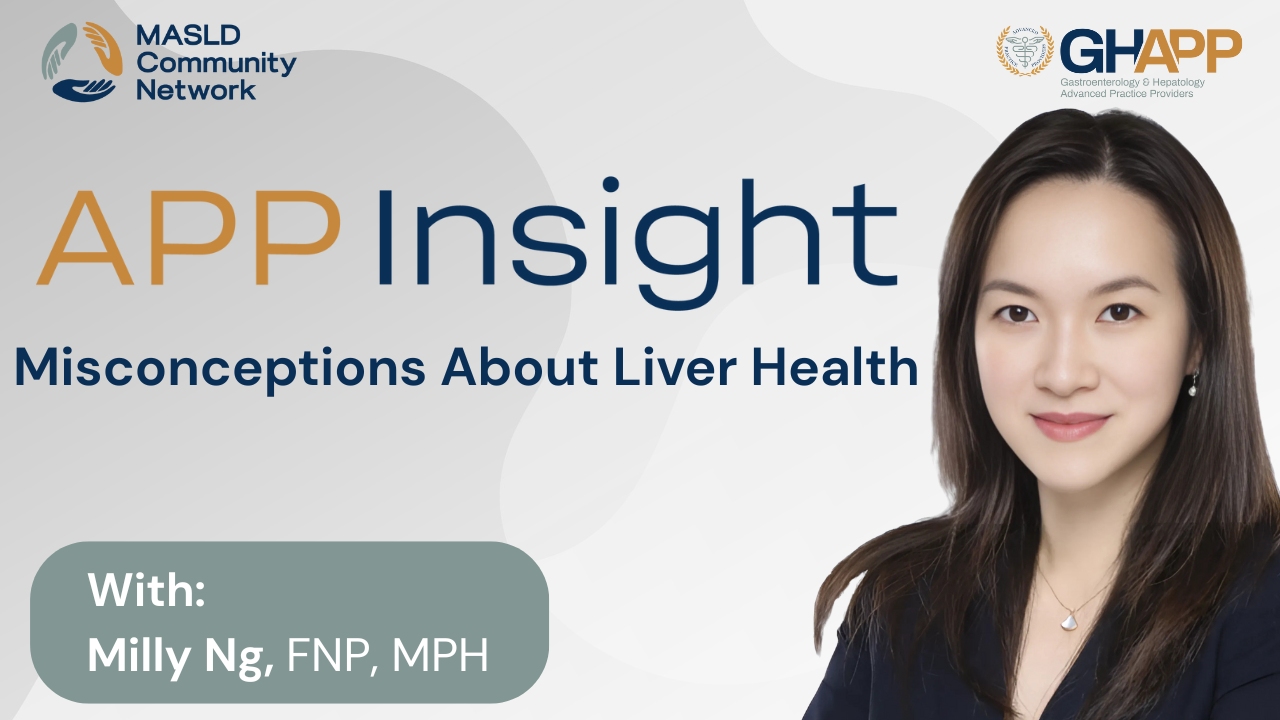
Misconceptions About Liver Health
July 2025
In this short and informative video, Milly Ng, a nurse practitioner at Tufts Medical Center, debunks two of the most common myths about liver health. First, she sets the record straight on liver cleanses and detox teas—explaining that your liver already detoxifies your body daily and doesn’t need fad diets or trendy supplements. Instead, what your liver needs is support through sustainable habits like reducing alcohol intake, cutting back on processed sugars, and maintaining a healthy weight. She also highlights a critical point: liver disease is often silent, and many people with significant liver damage have no symptoms until it’s advanced. If you're at risk due to metabolic syndrome, alcohol use, or other factors, Miu Lai urges you to talk to your healthcare provider about screening options like FIB-4 or FibroScan®. Your liver works hard for you—this video is a reminder to return the favor with real, lasting care.
Watch Now