


Chat with MASLD AI

Hi, I am MASLD AI.
Suggested Questions :
MASLD AI 06:50 AM

 November 2025

In this session, Jeremy Davis, ACNP from Shreveport, Louisiana, breaks down a practical, step-by-step approach to evaluating abnormal liver chemistries. Using a real patient case, he reviews how to interpret ALT, AST, ALP, bilirubin, MCV, and GGT patterns; when to suspect hepatocellular, cholestatic, or mixed injury; and how to build an efficient differential using history, medications, alcohol assessment, and key labs (viral hepatitis panel, autoimmune markers, iron studies, Wilson disease testing, alpha-1 antitrypsin phenotype). He also highlights the role of ultrasound, MRCP, non-invasive fibrosis tests (FIB-4, ELF, VCTE), and when biopsy is needed. A practical, clinic-ready guide for APPs and clinicians assessing elevated liver enzymes and differentiating MASLD, alcohol-related disease, DILI, and other common etiologies.
Related Webcast
Webcast: MASLD vs MetALD With Patrick Horne
 September 2025
In this case-based session from the GHAPP MASLD Community Network, Patrick Horne, NP explains how to differentiate metabolic dysfunction–associated steatotic liver disease (MASLD) from metabolic dysfunction plus alcohol-associated liver disease (MetALD). Through the story of a 52-year-old patient with F3 fibrosis and severe steatosis, he reviews the modern SLD framework, metabolic risk factors (e.g., BMI, PCOS, hypertension, hyperlipidemia), and how alcohol intake interacts with insulin resistance, the gut microbiome, and hepatic lipid handling to accelerate inflammation and fibrosis. Patrick demonstrates practical tools—clear “standard drink” counseling, thorough history, AUDIT-C screening, and objective biomarkers like PEth—to uncover under-reported alcohol use and classify patients on the MASLD–MetALD–ALD spectrum. Management takeaways include Mediterranean-style nutrition, exercise and weight-loss targets, consideration of pharmacologic options in advanced fibrosis, firm guidance on alcohol cessation, and nuanced discussion of HCC surveillance in F3 disease. Ideal for APPs and hepatology clinicians, this talk delivers actionable algorithms, definitions, and trial-readiness considerations to standardize MetALD assessment and improve outcomes in steatotic liver disease.
Watch Now
Webcast: MASLD Basics With Summer Collier
July 2025
Join Summer Collier, NP from UC San Diego Health, for an essential overview of MASLD (Metabolic Dysfunction-Associated Steatotic Liver Disease) in this GHAPP MASLD Community Network session. Designed for clinicians and healthcare professionals, this case-based talk covers the evolving nomenclature shift from NAFLD/NASH to MASLD/MASH, including key definitions, diagnostic criteria, and practical tools for identifying and managing patients with steatotic liver disease. Summer walks through foundational concepts like the role of hepatic steatosis, cardio-metabolic risk factors, and the importance of excluding significant alcohol use to establish a MASLD diagnosis. She also provides clinical insights into non-invasive fibrosis staging using FIB-4, FibroScan, elastography, and blood-based tests, as well as how to differentiate patients who may require hepatology referral or biopsy. Emphasizing the importance of early detection and risk stratification in primary care, this session highlights how fibrosis stage impacts prognosis, treatment planning, and long-term liver-related outcomes. For more educational sessions and MASLD tools — visit the GHAPP MASLD Community Network.
Watch Now
Webcast: Lifestyle Management With Becky Klemme
September 2025
In this educational session, Becky Klemme, NP from Sioux Falls, South Dakota, shares over a decade of hepatology experience to highlight lifestyle management for patients with Metabolic Dysfunction–Associated Steatotic Liver Disease (MASLD). Formerly known as NAFLD, MASLD is now the most common chronic liver disease worldwide, closely linked to obesity, type 2 diabetes, hypertension, and cardiovascular disease. Through a detailed patient case, Becky explains how to evaluate MASLD using labs, imaging, and non-invasive tests like FIB-4 and FibroScan, and how to distinguish between simple steatosis, steatohepatitis (MASH), and advanced fibrosis. She outlines practical strategies for dietary changes, exercise, weight loss goals, and metabolic risk reduction—all while keeping patient-centered, culturally sensitive care in mind. Viewers will also learn about the pathogenesis of MASLD and MASH, the role of genetics and lifestyle, and evidence-based approaches such as the Mediterranean diet, structured physical activity, behavioral counseling, and the 5A framework for patient engagement. With obesity and diabetes on the rise, early recognition and proactive lifestyle intervention are essential to preventing progression to cirrhosis, liver failure, or hepatocellular carcinoma (HCC). If you are a hepatology provider, APP, or clinician managing patients with fatty liver disease, this session offers actionable insights and patient care strategies you can use in practice.
Watch Now
Webcast: MASLD Pharmacotherapy With Emily Przybyl
October 2025
In this session, Emily Przybyl, PA-C from Erie County Medical Center in Buffalo, NY, explores current pharmacologic strategies for managing metabolic dysfunction–associated steatohepatitis (MASH) and metabolic dysfunction–associated steatotic liver disease (MASLD). She reviews the foundation of treatment—lifestyle modification, weight-loss interventions, and cardiovascular risk reduction—before detailing the evidence and clinical considerations for GLP-1 receptor agonists, vitamin E, pioglitazone, and the newly approved resmetirom. Emily discusses dosing strategies, histologic outcomes from major trials, and safety considerations including drug interactions, adverse effects, and monitoring recommendations. This presentation, part of the GHAPP MASLD & MASH Community Network and supported by Madrigal Pharmaceuticals, highlights how APPs can integrate emerging therapies into comprehensive, patient-centered management plans for MASLD and MASH.
Watch Now
Webcast: MASLD Pharmacotherapy With April Morris
August 2025
Join April Morris, NP, a hepatology and endocrinology nurse practitioner, for a comprehensive review of MASLD pharmacotherapy as part of the GHAPP MASLD Community Network. This expert-led session outlines a three-pronged strategy for managing Metabolic Dysfunction-Associated Steatotic Liver Disease (MASLD) and MASH, focusing on obesity reduction, cardiometabolic risk control, and liver-directed treatment. April walks through first-line lifestyle approaches, highlights key pharmacologic agents like GLP-1 receptor agonists, and explains their mechanisms and clinical relevance—including the groundbreaking data from the semaglutide trials showing resolution of MASH and improvement in liver fibrosis. The session also reviews the role and limitations of vitamin E and pioglitazone, emphasizing their risks in patients with diabetes or cardiovascular disease. The spotlight then shifts to resmetirom (Rezdiffra), a thyroid hormone receptor beta agonist FDA-approved for adults with non-cirrhotic NASH and moderate-to-advanced fibrosis (F2–F3). April explains the MAESTRO-NASH trial endpoints, clinical efficacy, common side effects, and appropriate patient selection. Learn how resmetirom improves fatty acid oxidation, reduces hepatic fat and fibrosis, and the key drug–drug interactions and statin dose considerations to manage during treatment. The discussion concludes with practical tips for monitoring, non-invasive staging (FibroScan, ELF, MRI-PDFF), and the evolving guidance on treatment duration, safety labs, and insurance barriers. This session is essential for clinicians navigating the growing landscape of therapeutic options in MASLD/MASH care.
Watch Now
Webcast: MASLD vs MetALD With Lavinia Iordache
September 2025
In this MASLD Community Network session, Lavinia Iordache, PA-C, clarifies the new SLD nomenclature and the distinctions between MASLD and MetALD, then walks through a real-world case (Ashley, 52) to show how to quantify alcohol intake, recognize cardiometabolic risk factors, and stage disease using non-invasive tests (FIB-4, FibroScan/VCTE with CAP, ELF). She explains how even “moderate” alcohol can accelerate fibrosis when metabolic risks are present, why PEth biomarker testing helps uncover under-reported use, and how to triage patients who land in the F3–F4 range. Practical takeaways include culturally sensitive Mediterranean-style nutrition, 5–10% weight-loss goals, tailored exercise, alcohol cessation, and when to consider resmetirom (Rezdiffra) for eligible F2–F3 non-cirrhotic patients. The talk also covers HCC surveillance (and when to prefer CT/MRI over ultrasound in central adiposity) and sets clear pathways for primary care, GI, and hepatology to work in sync.
Watch Now
Webcast: Lifestyle Management With Jennifer Geremia
August 2025
In this GHAPP MASLD Community Network presentation, Jennifer Geremia, PA-C, from Brigham and Women’s Hospital in Boston, discusses the critical role of lifestyle modifications in managing MASLD (Metabolic Associated Steatotic Liver Disease) and MASH (Metabolic Associated Steatohepatitis). Using a case-based approach, she highlights how patients with obesity, type 2 diabetes, hypertension, and hyperlipidemia can benefit from evidence-based interventions including dietary changes, weight reduction, and physical activity. The session emphasizes the importance of achieving and maintaining 7–10% weight loss, the benefits of a Mediterranean diet, and combining aerobic and resistance exercise to improve liver health and reduce progression to advanced fibrosis or cirrhosis. Jennifer also explores the challenges of long-term adherence, the impact of genetic and metabolic risk factors, and strategies for engaging patients in realistic and sustainable lifestyle changes. This program underscores how early intervention and multidisciplinary care can prevent liver disease progression and improve outcomes for at-risk patients.
Watch Now
Webcast: Non-Invasive Testing With Allison Moser
November 2025
In this educational session from the GHAPP MASLD Community Network, Allison Moser, NP, from Rush University Medical Center, explains how non-invasive testing (NITs) is changing the way clinicians assess and manage metabolic-associated steatotic liver disease (MASLD) and metabolic-associated steatohepatitis (MASH). Through a real patient case study, she reviews key diagnostic tools like FIB-4, ELF, FibroScan, and MRI elastography, highlighting how each test helps identify fibrosis risk, reduce the need for biopsy, and guide patient management. Learn how to interpret test results, understand their limitations, and apply them in everyday clinical practice to improve liver health outcomes. #MASLD #MASH #Fibrosis #NonInvasiveTesting #FIB4 #ELFTest #FibroScan #MRIelastography #LiverHealth #Hepatology #APPeducation
Watch Now
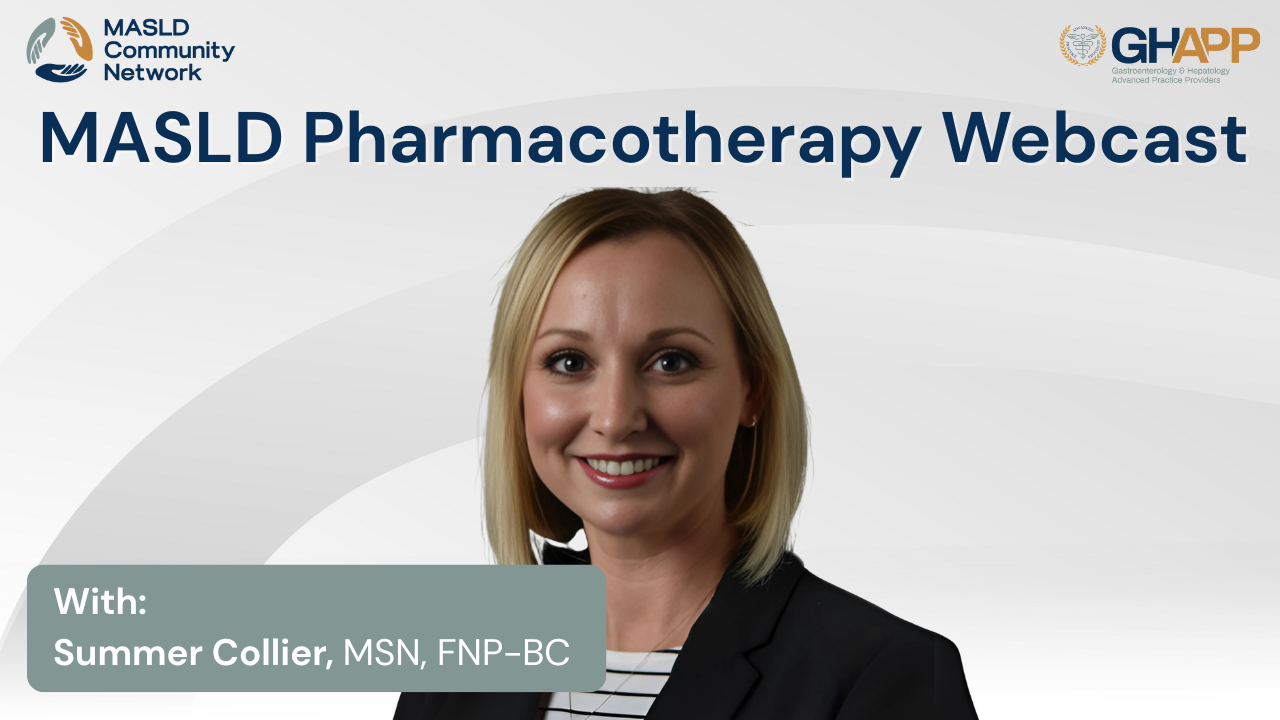
Webcast: MASLD Pharmacotherapy With Summer Collier
August 2025
Join Summer Collier, FNP, from UC San Diego Health, for a comprehensive discussion on pharmacotherapy for Metabolic Dysfunction-Associated Steatotic Liver Disease (MASLD) and MASH, presented through the GHAPP MASLD/MASH Community Network and sponsored by Madrigal Pharmaceuticals. In this session, Summer outlines the foundational role of lifestyle modification in treating MASLD, including diet, exercise, and weight loss, while emphasizing the growing need for liver-directed therapies in patients with moderate to advanced fibrosis. She reviews the clinical use of GLP-1 receptor agonists such as semaglutide and tirzepatide, which aid in glycemic control and significant weight loss, and explores their application in hepatology—including key data showing MASH resolution and fibrosis improvement. The discussion also addresses older treatment options like vitamin E and pioglitazone, explaining their risks, limitations, and patient selection criteria. The highlight of the presentation is a detailed analysis of resmetirom (Rezdiffra)—the first FDA-approved therapy for non-cirrhotic NASH with F2–F3 fibrosis. Summer walks through the MAESTRO-NASH trial, covering the mechanism of THR-β activation, improvements in liver histology, safety data, and practical prescribing guidance, including non-invasive monitoring, statin dose considerations, and drug–drug interactions. The session concludes with expert insights on staging, treatment duration, insurance access, and the evolving future of MASLD therapy. A must-watch for hepatology, GI, and primary care providers seeking to implement the latest evidence-based approaches in managing fatty liver disease.
Watch Now
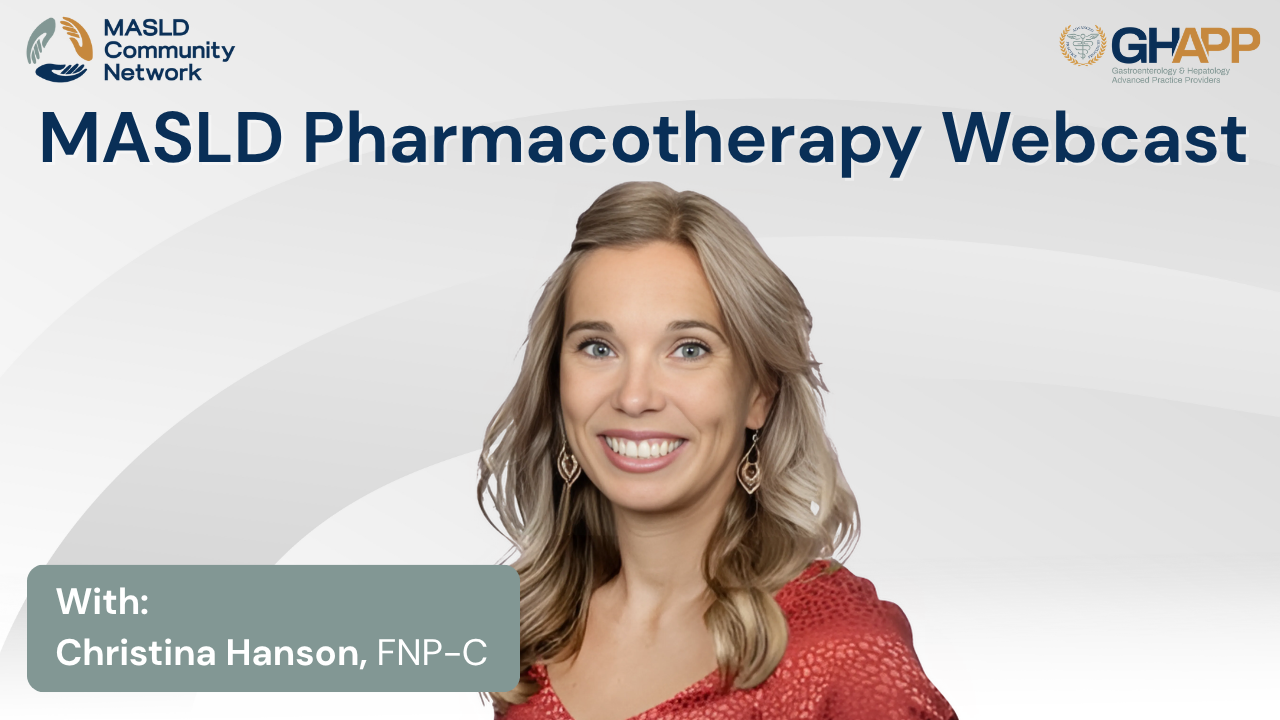
Webcast: MASLD Pharmacotherapy With Christina Hanson
September 2025
Learn about the latest advances in MASLD and MASH pharmacotherapy in this educational session from the GHAPP MASLD Community Network. Christina Hanson, NP, reviews the evolving landscape of treatment for metabolic dysfunction-associated steatotic liver disease (MASLD) and steatohepatitis (MASH), including the critical role of weight loss, cardiovascular risk reduction, and liver-directed therapies. The discussion covers current management strategies such as GLP-1 receptor agonists, bariatric interventions, statins, and lifestyle modification, while also exploring guideline-supported options like vitamin E and pioglitazone. Special attention is given to the first FDA-approved therapy for MASH, Resmetirom, including its mechanism, clinical trial results, safety considerations, and monitoring recommendations. Whether you are a hepatology specialist, primary care provider, endocrinologist, or advanced practice provider, this session highlights practical approaches to managing patients with MASLD and MASH and offers insights into emerging therapies that may shape future clinical practice.
Watch Now