


Chat with MASLD AI

Hi, I am MASLD AI.
Suggested Questions :
MASLD AI 07:28 AM

 October 2025

Punam Punja, MMS, PA-C, explores how to distinguish F3 fibrosis from F4 cirrhosis in patients with MASLD/MASH using real-world case comparisons. Learn how to interpret non-invasive testing, including FibroScan, ELF score, and FIB-4, and understand how results guide treatment decisions, from lifestyle interventions and GLP-1 therapy to the role of resmetirom in advanced fibrosis. Punja also reviews key monitoring steps, including HCC surveillance, multidisciplinary care, and when to consider MRI elastography or liver biopsy for accurate staging.
Related Webcast
Webcast: MASLD vs MetALD With Sarah Dawkins
 October 2025
In this session, Sarah Dawkins, NP, breaks down the overlap between MASLD and MetALD using a real case (FIB-4 = 2.01, FibroScan 11.4 kPa [F3], CAP 310). Presented via the GHAPP MASLD Community Network and supported by Madrigal Pharmaceuticals, she reviews how to stage disease with non-invasive tests (FIB-4, FibroScan/VCTE), why alcohol biomarkers (PEth) matter, and when to initiate HCC surveillance. Practical takeaways include counseling on a Mediterranean diet, exercise/weight loss targets, alcohol abstinence, and assessing candidacy for resmetirom in metabolic-predominant cases to slow fibrosis and improve outcomes.
Watch Now
Webcast: Comparing F3 and F4 Fibrosis With Lindsay Pratt
July 2025
Join Lindsay Pratt, PA-C from the University of Colorado Liver Transplant Program, for an in-depth clinical comparison of F3 and F4 fibrosis in patients with MASLD (Metabolic Dysfunction–Associated Steatotic Liver Disease) and MASH (Metabolic Dysfunction–Associated Steatohepatitis). Using an identical patient profile with differing non-invasive testing results, Lindsay demonstrates how to accurately stage fibrosis using tools like FIB-4, FibroScan, CAP score, and ELF test—emphasizing when pharmacologic intervention is appropriate and when advanced monitoring becomes critical. This session explores the clinical implications of fibrosis staging, treatment pathways including resmetirom (Rezdiffra), the role of GLP-1 receptor agonists, and practical nutrition and lifestyle strategies. For F4 patients, Lindsay outlines key elements of surveillance for hepatocellular carcinoma (HCC), portal hypertension management, and transplant evaluation. Whether you're in hepatology or primary care, this case-based discussion offers evidence-backed guidance for managing patients across the MASLD/MASH spectrum and preventing liver disease progression.
Watch Now
Webcast: MASLD vs MetALD With Scott Springer
October 2025
In this educational session, Scott Springer, PA-C, from Erie County Medical Center, discusses the intersection of Metabolic Dysfunction–Associated Steatotic Liver Disease (MASLD) and MetALD—a condition involving both metabolic dysfunction and alcohol-related liver injury. Presented through the GHAPP MASLD Community Network and supported by Madrigal Pharmaceuticals, this talk highlights diagnostic challenges, alcohol-use quantification, and the importance of objective biomarkers like PEth testing for accurate classification. Using a real patient case, Scott explains how metabolic risk factors and alcohol intake synergistically accelerate fibrosis, and how clinicians can apply non-invasive tests (FibroScan, ELF, FIB-4) and counseling strategies to improve patient outcomes.
Watch Now
Webcast: MASLD Pharmacotherapy With Stacie Egan
October 2025
Stacie Egan, FNP-C, talks about new and emerging ways to treat MASLD and MASH, including healthy lifestyle changes, GLP-1 medications for weight loss and diabetes, and the first FDA-approved treatment, Resmetirom, for patients with liver scarring (fibrosis). She explains how these options can improve liver health, what to consider when prescribing them, and how to monitor progress with simple, non-invasive tests.
Watch Now
Webcast: Lifestyle Management With Kristina Tuesday Werner
October 2025
Learn how to effectively manage Metabolic Dysfunction–Associated Steatotic Liver Disease (MASLD) and Metabolic Dysfunction–Associated Steatohepatitis (MASH) through lifestyle interventions in this educational session presented by Tuesday Warner, NP, as part of the GHAPP MASLD Community Network. Using a real-world patient case, this session explores non-invasive testing (FIB-4, FibroScan), metabolic risk assessment, and the importance of personalized care strategies. Viewers will gain practical insights on optimizing diet, exercise, and behavioral modification—including calorie reduction, the Mediterranean diet, and sustainable weight loss—to improve liver outcomes and overall metabolic health. #MASLD #MASH #MetabolicLiverDisease #LifestyleManagement #NonInvasiveTesting #FIB4 #FibroScan #WeightLoss #MediterraneanDiet #Obesity #Diabetes #InsulinResistance #Hepatology #GHAPP
Watch Now
Webcast: MASLD Basics With Chantil Jeffreys
September 2025
In this MASLD/MASH Community Network “Basics” session, Chantil Jeffreys, FNP clarifies the new MASLD/MASH nomenclature, how to recognize metabolic criteria (obesity, dyslipidemia, hypertension, impaired glucose/A1C, low HDL), and when to rule out other causes (alcohol overlap, DILI, cryptogenic disease). She walks through a practical primary-care workflow: start with FIB-4, then risk-stratify with FibroScan or ELF, identify patients who need hepatology referral, and decide when liver biopsy is appropriate (discordant/indeterminate NITs, suspected concomitant disease, select older patients). The talk covers global prevalence, natural history and progression (F0→F4/cirrhosis→HCC), and why aggressive cardiometabolic risk reduction and appropriate surveillance matter. You’ll leave with a clear algorithm to stage disease, monitor over time, and communicate the MASLD/MASH shift to colleagues and patients.
Watch Now
Webcast: Lifestyle Management With Milly Ng
August 2025
Join Milly Ng, a hepatology nurse practitioner at Tufts Medical Center in Boston, for an evidence-based session on lifestyle management for MASLD and MASH, presented through the GHAPP MASLD Community Network and sponsored by Madrigal Pharmaceuticals. Through the case of "Albert," a patient with steatosis and metabolic risk factors, Milly highlights the importance of personalized counseling and non-invasive testing like FIB-4 and FibroScan to assess fibrosis risk. She reviews how Metabolic Dysfunction-Associated Steatotic Liver Disease (MASLD) and its progressive form, MASH, can be reversed through diet, exercise, and weight loss, particularly before fibrosis advances to cirrhosis. Learn how to tailor dietary guidance to a patient's cultural background, socioeconomic status, and personal goals, and understand how central obesity and insulin resistance drive disease progression. Milly also reviews the genetic and environmental factors influencing steatosis, why aerobic training may be more effective than resistance workouts for liver health, and how validated tools like the EDAS (Exercise and Diet Adherence Scale) can track patient progress. This session empowers primary care and hepatology providers to deliver patient-centered lifestyle interventions that can prevent liver disease progression and reduce cardiometabolic risk.
Watch Now
Webcast: Non-Invasive Testing With Kelly Smeester
August 2025
Join Kelly Smeester, MMS, RD, PA-C, from South Denver Gastroenterology, for an in-depth discussion on the latest tools and strategies in non-invasive liver disease assessment, presented through the GHAPP MASLD Community Network. This evidence-based session walks viewers through a case study of a patient with Metabolic Dysfunction-Associated Steatotic Liver Disease (MASLD) and explores the full range of non-invasive testing modalities used to evaluate liver fat, stiffness, and fibrosis risk. Kelly breaks down the utility of key tests including FIB-4, ELF Score, FibroScan (VCTE), and MR Elastography, and compares their accuracy, accessibility, limitations, and clinical value. Learn how to interpret biomarkers such as CAP (Controlled Attenuation Parameter) and kPa (Kilopascals), how to navigate indeterminate FIB-4 results, and when to escalate to more advanced imaging like MRE. The session also provides insights into combined scoring models (FAST, MAST, MEFIB), real-world use cases, and how comorbidities and patient-specific factors (BMI, ALT, bilirubin, ascites) can impact test reliability. Whether you're managing early-stage fatty liver disease or advanced fibrosis, this session provides essential knowledge to guide accurate diagnosis, risk stratification, and long-term monitoring without a liver biopsy.
Watch Now
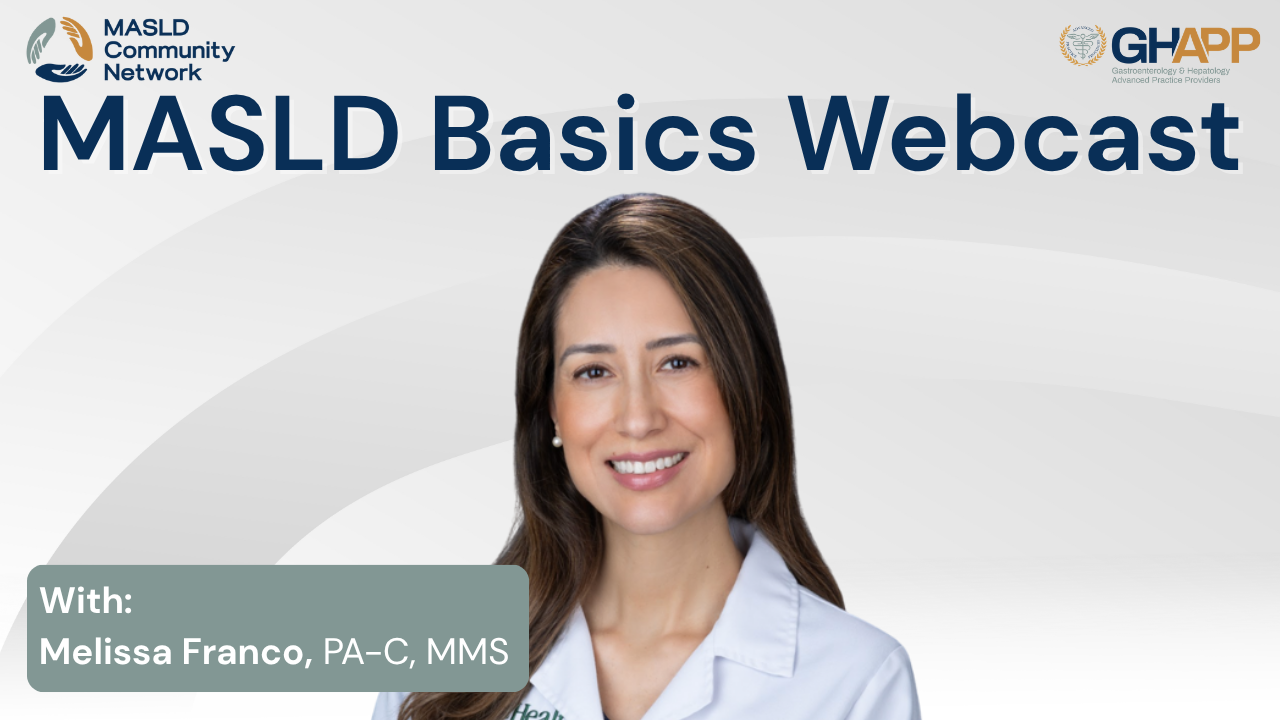
Webcast: MASLD Basics With Melissa Franco
August 2025
Join Melissa Franco, PA-C, from the University of Miami for a comprehensive review of MASLD (Metabolic Dysfunction-Associated Steatotic Liver Disease) and the 2023 nomenclature updates replacing NAFLD and NASH. Presented through the GHAPP MASLD Community Network and sponsored by Madrigal Pharmaceuticals, this session covers the spectrum of steatotic liver disease, including MASLD, MASH, MetALD, alcohol-related liver disease (ALD), and other causes of hepatic steatosis. Learn how to diagnose MASLD using imaging, cardiometabolic risk criteria, and how to exclude other causes like alcohol use, medications, and genetic disorders. Melissa explains how to risk stratify patients using FIB-4, FibroScan, and ELF testing, and when to consider referral to hepatology, especially for patients at intermediate or high risk for advanced fibrosis. The talk also explores global prevalence, natural history, disease progression to cirrhosis and HCC, and highlights the importance of identifying and managing patients with F2–F4 fibrosis, now classified as at-risk MASH. Through a real-world case study, viewers are guided on how to perform a thorough MASLD workup and assess patients for pharmacotherapy, lifestyle counseling, and surveillance protocols. Whether you are in primary care, GI, or endocrinology, this session is an essential resource for early diagnosis and comprehensive management of fatty liver disease in today’s clinical practice.
Watch Now
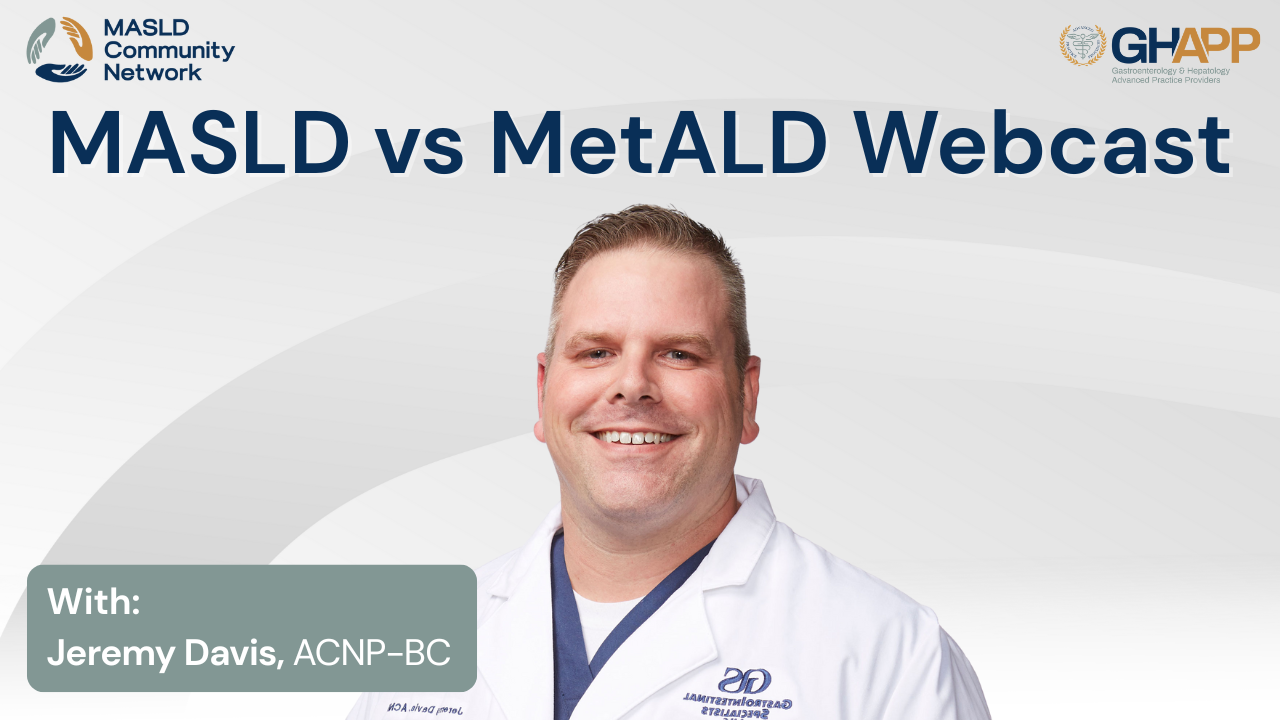
Webcast: MASLD vs MetALD With Jeremy Davis
September 2025
In this MASLD Community Network talk, Jeremy Davis, NP, uses a real-world case to clarify how to differentiate MASLD from MetALD, interpret alcohol exposure, and stage disease with non-invasive tools. He explains standard drink equivalents (≈14 g ethanol) and why accurate histories plus objective biomarkers matter, then walks through labs and elastography (FibroScan kPa/CAP) showing F3 fibrosis with severe steatosis. You’ll learn a practical workflow to rule out alternative etiologies, quantify alcohol use, and understand how metabolic risk plus alcohol accelerates fibrosis and decompensation risk. Jeremy outlines counseling pearls (abstinence recommendations, Mediterranean-style diet, weight loss, activity), eligibility considerations for resmetirom in non-cirrhotic MASH (F2–F3), and when to start HCC surveillance. Watch to strengthen your staging, counseling, and treatment decisions for patients who fall along the MASLD–MetALD spectrum.
Watch Now