


Chat with MASLD AI

Hi, I am MASLD AI.
Suggested Questions :
MASLD AI 07:05 AM

 October 2025

In this educational session, Marcella Pomeranz, DNP, explores the evolving pharmacotherapy options for Metabolic Dysfunction–Associated Steatotic Liver Disease (MASLD) and Metabolic Dysfunction–Associated Steatohepatitis (MASH). Presented through the GHAPP MASLD Community Network and supported by Madrigal Pharmaceuticals, this talk reviews both established and emerging therapies—from GLP-1 receptor agonists and pioglitazone to vitamin E and the recently approved resmetirom (Rezdiffra). Marcella discusses practical considerations for treatment selection, dosing adjustments, and medication safety, along with strategies to combine pharmacologic therapy with diet, exercise, and lifestyle modification to slow fibrosis progression and improve liver outcomes.
Related Webcast
Webcast: MASLD vs MetALD With Maribeth Capuno
 September 2025
In this case-based talk from the GHAPP MASLD Community Network, Maribeth Capuno, DNP reviews how to differentiate metabolic dysfunction–associated steatotic liver disease (MASLD) from metabolic dysfunction plus alcohol-associated liver disease (MetALD). Using a 52-year-old patient with ultrasound-confirmed steatosis, metabolic risks (PCOS, hypertension, hyperlipidemia, prediabetes), and daily wine intake, she walks through labs and noninvasive testing—FibroScan 11.4 kPa (F3 fibrosis) and CAP 310 (severe steatosis)—plus an objective PEth biomarker of 120 indicating moderate–heavy alcohol use. The session covers the SLD spectrum, “standard drink” counseling, why questionnaires (AUDIT) and biomarkers (PEth) uncover under-reported alcohol use, and how alcohol synergizes with insulin resistance and dyslipidemia to accelerate fibrosis and decompensation risk. Practical management includes Mediterranean-style nutrition, exercise with 5–10% weight-loss goals, strict alcohol cessation, medication considerations for advanced fibrosis, and HCC surveillance in F3 disease. Ideal for APPs and hepatology clinicians, this video delivers step-by-step evaluation, diagnostic criteria, and clear, patient-education talking points to improve MASLD/MetALD assessment and outcomes.
Watch Now
Webcast: Non-Invasive Testing With Sherona Bau
July 2025
In this engaging and highly informative GHAPP MASLD Community Network session, Sherona Bau, NP, walks attendees through a practical overview of non-invasive testing (NIT) for evaluating liver health in patients with MASLD (Metabolic dysfunction-associated steatotic liver disease) and MASH (Metabolic dysfunction-associated steatohepatitis). Drawing on real-world clinical experience, Sherona explains why non-invasive testing is essential for identifying fibrosis risk in a population where liver steatosis is prevalent in up to 30% of U.S. adults. Through the case of a 65-year-old Hispanic male named Albert, Sherona demonstrates how to interpret and apply tools such as FIB-4, FibroScan (VCTE and CAP score), ELF (Enhanced Liver Fibrosis) test, and MR Elastography (MRE). She highlights their respective strengths, limitations, clinical cut-offs, and insurance-related considerations. The session also covers when to order tests, how to assess data quality (e.g., IQR/median ratio in VCTE), and when to escalate care to hepatology or cardiology. Whether you are a primary care provider, endocrinologist, or hepatology specialist, this talk delivers practical algorithms and decision-making pathways for managing MASLD, improving early detection of fibrosis and cirrhosis, and integrating cardiovascular risk assessment into liver care. Sherona also emphasizes the importance of alcohol use history, metabolic syndrome risk factors, and annual NIT follow-up in patients at risk for disease progression.
Watch Now
Webcast: MASLD Pharmacotherapy With Summer Collier
August 2025
Join Summer Collier, FNP, from UC San Diego Health, for a comprehensive discussion on pharmacotherapy for Metabolic Dysfunction-Associated Steatotic Liver Disease (MASLD) and MASH, presented through the GHAPP MASLD/MASH Community Network and sponsored by Madrigal Pharmaceuticals. In this session, Summer outlines the foundational role of lifestyle modification in treating MASLD, including diet, exercise, and weight loss, while emphasizing the growing need for liver-directed therapies in patients with moderate to advanced fibrosis. She reviews the clinical use of GLP-1 receptor agonists such as semaglutide and tirzepatide, which aid in glycemic control and significant weight loss, and explores their application in hepatology—including key data showing MASH resolution and fibrosis improvement. The discussion also addresses older treatment options like vitamin E and pioglitazone, explaining their risks, limitations, and patient selection criteria. The highlight of the presentation is a detailed analysis of resmetirom (Rezdiffra)—the first FDA-approved therapy for non-cirrhotic NASH with F2–F3 fibrosis. Summer walks through the MAESTRO-NASH trial, covering the mechanism of THR-β activation, improvements in liver histology, safety data, and practical prescribing guidance, including non-invasive monitoring, statin dose considerations, and drug–drug interactions. The session concludes with expert insights on staging, treatment duration, insurance access, and the evolving future of MASLD therapy. A must-watch for hepatology, GI, and primary care providers seeking to implement the latest evidence-based approaches in managing fatty liver disease.
Watch Now
Live From GHAPP National: Autoimmune Hepatitis: How I Approach It
November 2025
Join Lindsay Yoder, PA-C from Indiana University, for a practical walkthrough on how to evaluate and manage autoimmune hepatitis (AIH). This concise session covers key clinical clues, diagnostic criteria, common patient questions, and real-world approaches to treatment—from steroids and azathioprine to mycophenolate, tacrolimus, and emerging steroid-sparing strategies. Learn how to recognize AIH presentations, set realistic expectations for biochemical remission, manage intolerance and relapse, and tailor long-term therapy for better outcomes. A quick, high-yield guide for clinicians looking to strengthen their approach to autoimmune hepatitis.
Watch Now
Webcast: MASLD Pharmacotherapy With Milly Ng
September 2025
Pharmacotherapy for MASLD is rapidly evolving, and clinicians now have more tools than ever to guide treatment decisions. In this session, Milly Ng, NP at Tufts Medical Center in Boston, breaks down a practical framework for when to initiate treatment, how to select the right therapy, and what monitoring strategies to use. From lifestyle modification and statins to GLP-1 receptor agonists and the first FDA-approved liver-directed therapy, resmetirom, this discussion highlights both established and emerging options. You’ll also learn how GLP-1s can support weight loss and liver health, the evidence behind vitamin E and pioglitazone, and the pivotal Maestro NASH trial that secured accelerated approval for resmetirom. Whether you’re managing patients with obesity, diabetes, or advanced fibrosis, this overview offers actionable strategies to simplify complex decisions and improve outcomes in MASLD/MASH care.
Watch Now
Webcast: MASLD vs MetALD With Kelly Smeester
September 2025
In this session from the GHAPP MASLD Community Network, Kelly Smeester, PA-C at South Denver Gastroenterology, reviews a patient case to highlight the overlap between metabolic dysfunction–associated steatotic liver disease (MASLD) and metabolic dysfunction plus alcohol-associated liver disease (MetALD). Using real-world labs, FibroScan values, CAP scores, and the PEth biomarker, she explains how clinicians can distinguish MASLD from MetALD and alcohol-related liver disease. The discussion covers key metabolic risk factors such as PCOS, hypertension, and hyperlipidemia, the impact of moderate alcohol intake, and how these drivers accelerate fibrosis progression and increase the risk of decompensation. Viewers will learn how to evaluate alcohol use through standardized definitions, clinical questionnaires, and biomarkers, as well as best practices for patient education, lifestyle counseling, and management, including diet, exercise, pharmacologic options, and hepatocellular carcinoma (HCC) surveillance. This case-based talk emphasizes why accurate diagnosis and objective assessment of alcohol consumption are essential for both clinical care and research in steatotic liver disease.
Watch Now
Webcast: MASLD vs MetALD With Oyin Penny
October 2025
In this educational session, Oyin Penny, FNP, from Premier Gastroenterology of Kansas City, discusses the overlap between MASLD and MetALD, highlighting how metabolic risk factors and alcohol intake accelerate liver injury and fibrosis. Presented through the GHAPP MASLD Community Network and supported by Madrigal Pharmaceuticals, this talk uses a real-world case study to explain diagnostic tools like FibroScan, CAP score, and PEth testing, along with clinical criteria for distinguishing MASLD, MetALD, and ALD. Key management strategies include Mediterranean diet, weight loss, alcohol abstinence, and monitoring for advanced fibrosis and HCC risk.
Watch Now
Webcast: MASLD Pharmacotherapy With Cheryl Walsh
October 2025
In this talk, Cheryl Walsh, ACNP-C, reviews modern pharmacotherapy for MASLD/MASH—from foundational lifestyle/weight-loss strategies and GLP-1 receptor agonists to legacy options (vitamin E, pioglitazone) and the FDA-approved resmetirom with practical tips on dosing, monitoring, and drug–drug interactions (e.g., statins, procedure planning). She explains how to triage candidates, set realistic diet/exercise goals, and tailor guidance culturally, while outlining safety considerations (GI adverse effects, anesthesia risk) and follow-up with non-invasive tests. Presented via the GHAPP MASLD Community Network with support from Madrigal Pharmaceuticals, this session equips APPs to slow fibrosis progression and improve outcomes.
Watch Now
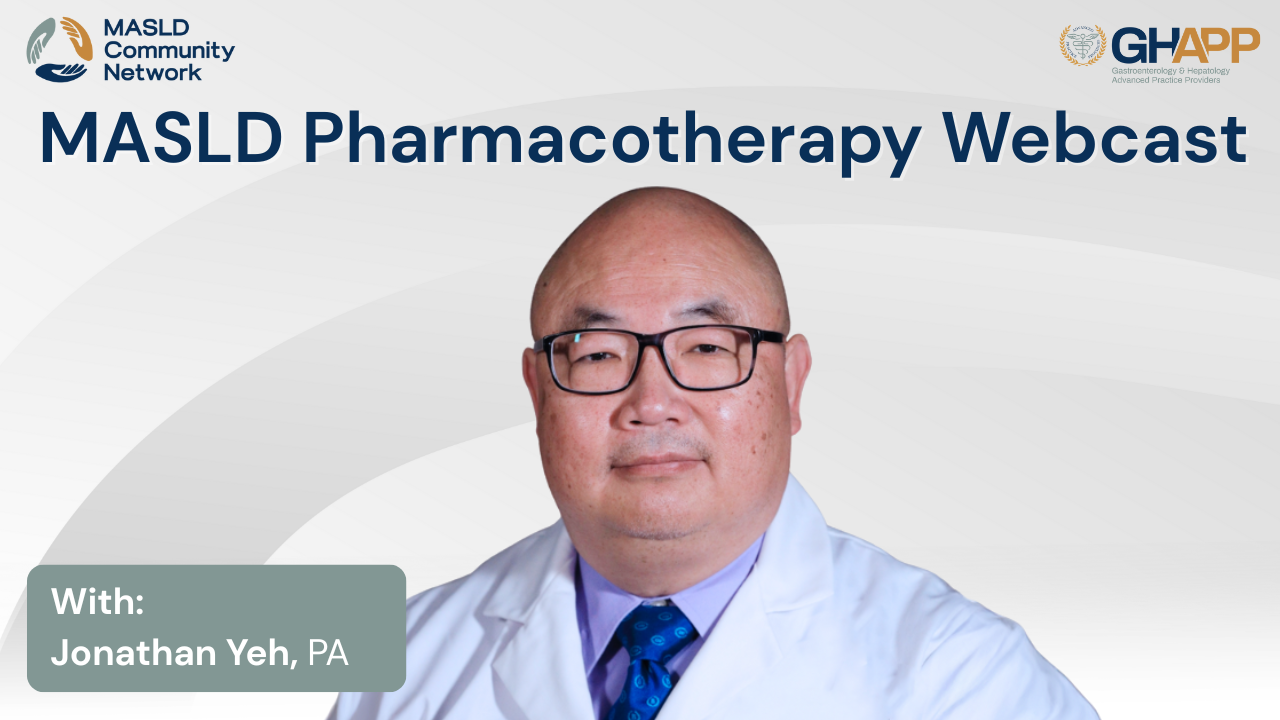
Webcast: MASLD Pharmacotherapy With Jonathan Yeh
August 2025
In this GHAPP MASLD Community Network Education Series, Jonathan Yeh, PA from Columbia University Irving Medical Center, reviews the latest advances in pharmacotherapy for MASLD (Metabolic Associated Steatotic Liver Disease) and MASH (Metabolic Associated Steatohepatitis). This presentation explores the evolution from NAFLD to MASLD, highlighting why metabolic dysfunction is central to disease progression. Jonathan discusses the role of lifestyle modification, GLP-1 receptor agonists (such as semaglutide and tirzepatide), vitamin E, pioglitazone, and bariatric surgery, while focusing on resmetirom—the first FDA-approved therapy for adults with non-cirrhotic MASH and moderate to advanced fibrosis. The session explains how resmetirom works as a thyroid hormone receptor beta agonist, its clinical trial evidence from the MAESTRO-NASH study, patient eligibility, safety considerations, drug–drug interactions, and monitoring recommendations. With ongoing studies and expanding treatment options, this discussion provides clinicians with practical strategies for managing MASLD and MASH, improving liver outcomes, and addressing the challenges of insurance access and long-term therapy.
Watch Now

Webcast: MASLD Basics With Punam Punja
October 2025
Punam Punja, PA provides an overview of MASLD basics, explaining the 2023 terminology update that replaced NAFLD/NASH with MASLD/MASH and introduced MetALD for patients with metabolic dysfunction and alcohol exposure. Learn how to diagnose MASLD using imaging, metabolic risk factors, and non-invasive tests such as FIB-4, ELF, and FibroScan—plus when to refer for hepatology evaluation or liver biopsy. Punja also reviews staging, HCC surveillance, and practical lifestyle recommendations for patients at risk of fibrosis and cirrhosis.
Watch Now