


Chat with MASLD AI

Hi, I am MASLD AI.
Suggested Questions :
MASLD AI 07:17 AM

 November 2025

In this educational presentation, Tina Gregg, NP-C breaks down the evolving pharmacotherapy landscape for MASLD and MASH, emphasizing a holistic, metabolic-centered approach to patient management. Tina reviews key treatment pillars—including weight loss, cardiovascular risk reduction, and direct NASH-targeted therapy—highlighting evidence-based strategies such as lifestyle modification, GLP-1 receptor agonists, pioglitazone, vitamin E, and the first FDA-approved therapy for MASH with F2–F3 fibrosis, resmetirom. She explains how these interventions improve hepatic histology, reduce fibrosis, and address comorbidities like diabetes and obesity. The session also explores data from the MAESTRO-NASH trial, drug-drug interaction considerations, and ongoing monitoring guidance for resmetirom. Whether you’re managing patients in hepatology, GI, or primary care, this discussion offers a comprehensive overview of current and emerging medical therapies shaping the future of metabolic liver disease care.
Related Webcast

Webcast: Non-Invasive Testing With Sherona Bau
 July 2025
In this engaging and highly informative GHAPP MASLD Community Network session, Sherona Bau, NP, walks attendees through a practical overview of non-invasive testing (NIT) for evaluating liver health in patients with MASLD (Metabolic dysfunction-associated steatotic liver disease) and MASH (Metabolic dysfunction-associated steatohepatitis). Drawing on real-world clinical experience, Sherona explains why non-invasive testing is essential for identifying fibrosis risk in a population where liver steatosis is prevalent in up to 30% of U.S. adults. Through the case of a 65-year-old Hispanic male named Albert, Sherona demonstrates how to interpret and apply tools such as FIB-4, FibroScan (VCTE and CAP score), ELF (Enhanced Liver Fibrosis) test, and MR Elastography (MRE). She highlights their respective strengths, limitations, clinical cut-offs, and insurance-related considerations. The session also covers when to order tests, how to assess data quality (e.g., IQR/median ratio in VCTE), and when to escalate care to hepatology or cardiology. Whether you are a primary care provider, endocrinologist, or hepatology specialist, this talk delivers practical algorithms and decision-making pathways for managing MASLD, improving early detection of fibrosis and cirrhosis, and integrating cardiovascular risk assessment into liver care. Sherona also emphasizes the importance of alcohol use history, metabolic syndrome risk factors, and annual NIT follow-up in patients at risk for disease progression.
Watch Now
Webcast: MASLD Pharmacotherapy With Jill Olmstead
September 2025
Join Jill Olmstead, DNP from Providence Health for a practical, clinician-focused overview of MASLD pharmacotherapy and new treatment horizons for hepatic steatosis. This session in the GHAPP MASLD & MASH Community Network covers the shift in nomenclature, why care must be multidisciplinary (obesity, type 2 diabetes, dyslipidemia, hypertension, cardiovascular risk), and how to stage disease with FIB-4, noninvasive tests, and FibroScan before initiating therapy. Jill reviews lifestyle and weight-loss strategies, GLP-1 receptor agonists—their mechanisms, common GI side effects, and peri-procedure considerations due to delayed gastric emptying—plus where vitamin E and pioglitazone do and don’t fit today. She also walks through practical use of resmetirom for non-cirrhotic MASH with F2–F3 fibrosis (labs to order, monitoring, drug–drug interactions, and setting expectations alongside diet and exercise). If you’re a GI/hepatology clinician, APP, or primary-care partner looking to streamline risk reduction, staging, and evidence-based therapy for MASLD/MASH, this talk delivers step-by-step guidance you can use in clinic today.
Watch Now
Webcast: Lifestyle Management With Milly Ng
August 2025
Join Milly Ng, a hepatology nurse practitioner at Tufts Medical Center in Boston, for an evidence-based session on lifestyle management for MASLD and MASH, presented through the GHAPP MASLD Community Network and sponsored by Madrigal Pharmaceuticals. Through the case of "Albert," a patient with steatosis and metabolic risk factors, Milly highlights the importance of personalized counseling and non-invasive testing like FIB-4 and FibroScan to assess fibrosis risk. She reviews how Metabolic Dysfunction-Associated Steatotic Liver Disease (MASLD) and its progressive form, MASH, can be reversed through diet, exercise, and weight loss, particularly before fibrosis advances to cirrhosis. Learn how to tailor dietary guidance to a patient's cultural background, socioeconomic status, and personal goals, and understand how central obesity and insulin resistance drive disease progression. Milly also reviews the genetic and environmental factors influencing steatosis, why aerobic training may be more effective than resistance workouts for liver health, and how validated tools like the EDAS (Exercise and Diet Adherence Scale) can track patient progress. This session empowers primary care and hepatology providers to deliver patient-centered lifestyle interventions that can prevent liver disease progression and reduce cardiometabolic risk.
Watch Now
Webcast: MASLD Basics With Emily Przybyl
September 2025
Emily Przybyl, PA-C, breaks down the basics of Steatotic Liver Disease (SLD) and the updated MASLD/MASH nomenclature—what changed, why it matters, and how to apply it in daily practice. You'll learn how to distinguish MASLD, MetALD, and alcohol-associated liver disease, interpret alcohol exposure (weekly vs. daily intake), and recognize non-metabolic causes of steatosis (DILI, monogenic disorders, viral hepatitis). Emily walks through primary care–friendly risk assessment using FIB-4, when to order VCTE/FibroScan or the ELF test, when to refer to hepatology, and when liver biopsy is still the right move in discordant cases. Using a real patient case, Emily demonstrates a stepwise chronic liver disease workup (viral serologies, iron studies, autoimmune markers, celiac, A1AT, HIV, lipids, A1C, and PEth for alcohol), plus how ultrasound findings (steatosis, smooth contour, spleen size) inform staging. She reviews natural history and progression (who’s at risk to advance to fibrosis/cirrhosis), the roles of genetics and the gut microbiome, and practical counseling on lifestyle modification—BMI/waist thresholds by ethnicity, cardiometabolic risk control, and culturally sensitive nutrition and exercise plans. Perfect for APPs, primary care, and hepatology teams looking for a clear, actionable primer on MASLD/MASH.
Watch Now
Webcast: Lifestyle Management With Jennifer Geremia
August 2025
In this GHAPP MASLD Community Network presentation, Jennifer Geremia, PA-C, from Brigham and Women’s Hospital in Boston, discusses the critical role of lifestyle modifications in managing MASLD (Metabolic Associated Steatotic Liver Disease) and MASH (Metabolic Associated Steatohepatitis). Using a case-based approach, she highlights how patients with obesity, type 2 diabetes, hypertension, and hyperlipidemia can benefit from evidence-based interventions including dietary changes, weight reduction, and physical activity. The session emphasizes the importance of achieving and maintaining 7–10% weight loss, the benefits of a Mediterranean diet, and combining aerobic and resistance exercise to improve liver health and reduce progression to advanced fibrosis or cirrhosis. Jennifer also explores the challenges of long-term adherence, the impact of genetic and metabolic risk factors, and strategies for engaging patients in realistic and sustainable lifestyle changes. This program underscores how early intervention and multidisciplinary care can prevent liver disease progression and improve outcomes for at-risk patients.
Watch Now
Webcast: MASLD Pharmacotherapy With Ellie Gonyeau
September 2025
In this practical, clinician-focused talk, Ellie Gonyeau, NP, walks through a streamlined pharmacotherapy framework for MASLD/MASH—anchored on three pillars: obesity management, cardiometabolic risk reduction (T2D, hypertension, dyslipidemia), and liver-directed therapy. She reviews where GLP-1 receptor agonists fit (weight loss, glycemic control, peri-procedure considerations), summarizes evidence and patient selection for high-dose vitamin E and pioglitazone, and explains the role of resmetirom—the first FDA-approved therapy for non-cirrhotic MASH with F2–F3 fibrosis—its liver-selective THR-β mechanism, pivotal trial outcomes, common AEs, and drug-interaction/ statin considerations. You’ll also learn how to monitor and restage using non-invasive tests (FibroScan kPa/CAP, ELF, labs), set measurable lifestyle goals, and navigate real-world questions around coverage, testing cadence, and treatment duration—so you can confidently tailor therapy and improve outcomes for patients across the MASLD/MASH spectrum.
Watch Now
Webcast: Lifestyle Management With Christie Morrison
September 2025
In this MASLD Community Network session, Christie Morrison, NP with Oshi Health and TDDC (GI Alliance), reviews a real patient case to highlight how lifestyle changes can help manage metabolic dysfunction–associated steatotic liver disease (MASLD) and MASH. She explains how non-invasive tests like FIB-4 scores and FibroScan results guide risk assessment, and why weight loss, healthy diet, and regular exercise are key to slowing or reversing liver damage. Using a culturally sensitive approach, Christie shows how to tailor recommendations for patients while addressing common risk factors such as obesity, diabetes, and high blood pressure. She also covers the role of calorie reduction, resistance training, and Mediterranean-style eating in improving liver health. This practical talk is designed for APPs, GI providers, and healthcare professionals looking for simple strategies to help patients prevent progression to fibrosis and cirrhosis.
Watch Now
Webcast: Lifestyle Management With Becky Klemme
September 2025
In this educational session, Becky Klemme, NP from Sioux Falls, South Dakota, shares over a decade of hepatology experience to highlight lifestyle management for patients with Metabolic Dysfunction–Associated Steatotic Liver Disease (MASLD). Formerly known as NAFLD, MASLD is now the most common chronic liver disease worldwide, closely linked to obesity, type 2 diabetes, hypertension, and cardiovascular disease. Through a detailed patient case, Becky explains how to evaluate MASLD using labs, imaging, and non-invasive tests like FIB-4 and FibroScan, and how to distinguish between simple steatosis, steatohepatitis (MASH), and advanced fibrosis. She outlines practical strategies for dietary changes, exercise, weight loss goals, and metabolic risk reduction—all while keeping patient-centered, culturally sensitive care in mind. Viewers will also learn about the pathogenesis of MASLD and MASH, the role of genetics and lifestyle, and evidence-based approaches such as the Mediterranean diet, structured physical activity, behavioral counseling, and the 5A framework for patient engagement. With obesity and diabetes on the rise, early recognition and proactive lifestyle intervention are essential to preventing progression to cirrhosis, liver failure, or hepatocellular carcinoma (HCC). If you are a hepatology provider, APP, or clinician managing patients with fatty liver disease, this session offers actionable insights and patient care strategies you can use in practice.
Watch Now
Webcast: MASLD vs MetALD With Lindsay Pratt
October 2025
Learn from Lindsay Pratt, PA-C at the University of Colorado Hepatology Clinic, as she explores the evolving landscape of metabolic dysfunction–associated steatotic liver disease (MASLD) and metabolic dysfunction and alcohol-associated liver disease (MetALD) in this comprehensive, case-based discussion. Drawing on over 15 years of experience in hepatology and liver transplantation, Lindsay walks through real-world evaluation and management of a 52-year-old patient with hepatic steatosis, highlighting key diagnostic clues, lab interpretations, and the importance of incorporating objective biomarkers such as PEth testing to accurately assess alcohol use. This educational session provides clarity on differentiating MASLD, MASH, and MetALD, interpreting FibroScan results, and addressing cardiometabolic risk factors like obesity, hypertension, and hyperlipidemia. Pratt also emphasizes practical treatment strategies, including lifestyle modification, GLP-1 therapy, and alcohol cessation counseling, along with considerations for emerging therapies like resmetirom (Rezdiffra). APPs and hepatology clinicians will gain valuable insights into patient communication, disease classification, and evidence-based management approaches that can help slow progression, reduce fibrosis risk, and optimize liver outcomes.
Watch Now
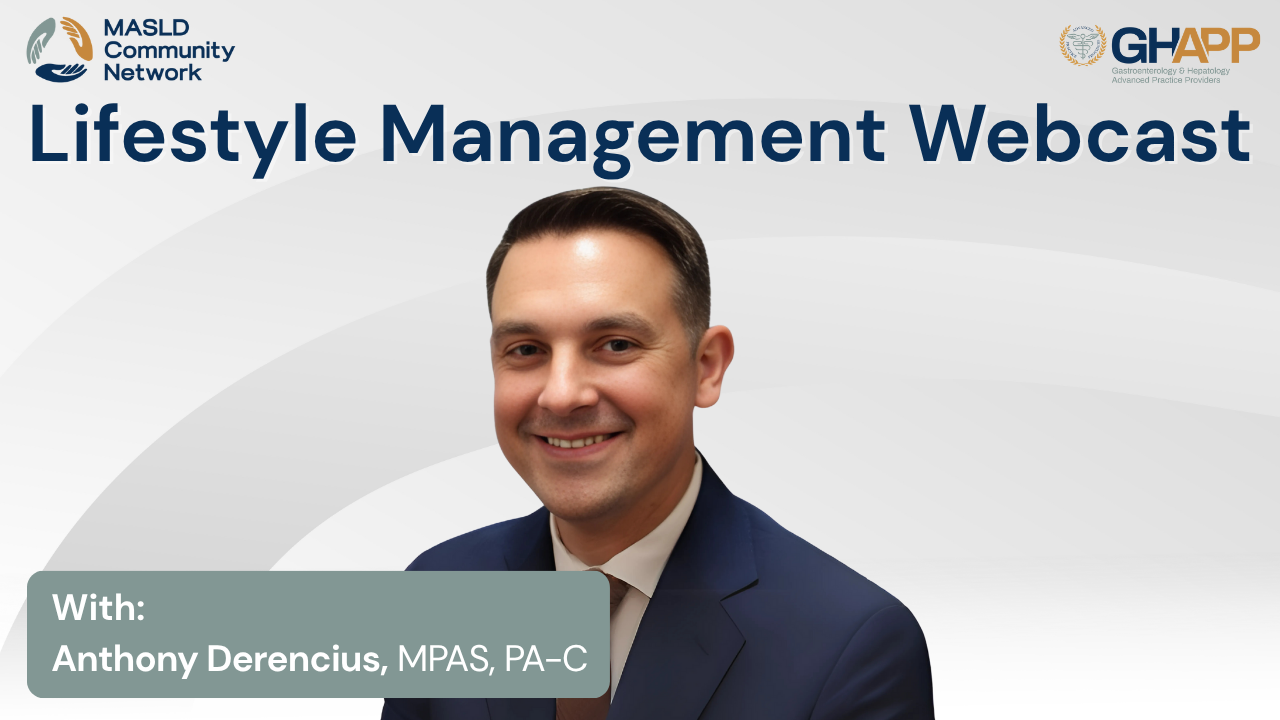
Webcast: Lifestyle Management With Anthony Derencius
July 2025
Join Anthony Derencius, PA-C, at Pinnacle Clinical Research, for an in-depth, case-based discussion on the role of lifestyle management in MASH and MASLD. In this educational session from the GHAPP MASLD Community Network, Anthony walks through the real-world case of a 65-year-old patient with obesity, diabetes, and suspected metabolic liver disease, highlighting how to interpret non-invasive diagnostics like FIB-4 scores and transient elastography. He explains the clinical significance of metabolic risk factors, genetic predispositions (such as PNPLA3), and how personalized approaches to nutrition and exercise can alter the progression of fatty liver disease. With evidence-based insights on the Mediterranean diet, aerobic vs resistance training, and behavior change strategies, this video offers frontline strategies to support patients in reversing or slowing fibrosis. Watch to learn how providers can combine patient education, lifestyle interventions, and emerging pharmacotherapy to manage MASLD and MASH more effectively. Educational support provided by Madrigal Pharmaceuticals. For more disease state content, visit the GHAPP MASLD Community Network.
Watch Now