


Chat with MASLD AI

Hi, I am MASLD AI.
Suggested Questions :
MASLD AI 07:28 AM

 October 2025

Elizabeth Alqueza, PA-C, explains MASLD and MetALD using a real patient case—covering risk factors (PCOS, BMI, HTN, lipids), how to stage disease with FibroScan/Liver Stiffness and CAP, and why alcohol plus metabolic dysfunction accelerates fibrosis. Learn practical steps: PEth biomarker to uncover alcohol use, lifestyle therapy (Mediterranean diet, weight loss), when resmetirom may be considered, and HCC surveillance for advanced fibrosis.
Related Webcast
Webcast: MASLD vs MetALD With Lindsay Yoder
 November 2025
In this educational discussion, Lindsay Yoder, PA from Indiana University Health dives into one of the fastest-evolving areas in hepatology—metabolic dysfunction–associated steatotic liver disease (MASLD) and metabolic dysfunction–associated alcohol-related liver disease (MetALD). Using a real-world case study, Lindsay explains how to identify, classify, and manage patients with overlapping metabolic and alcohol-related risk factors. She outlines how to interpret key non-invasive assessments such as FibroScan CAP scores, PEth testing, and ANI scoring, while emphasizing how alcohol intake—even at moderate levels—can accelerate liver fibrosis in patients with metabolic dysfunction. The session also reviews diagnostic thresholds, treatment strategies including lifestyle modification, Mediterranean diet, and resmetirom, and the importance of counseling patients on alcohol reduction. Whether you’re a hepatology APP or primary care provider, this talk offers a clear, practical framework for navigating MASLD, MetALD, and the new nomenclature shaping liver disease management today.
Watch Now
Webcast: Lifestyle Management With Michelle Barnett
July 2025
Join Michelle Barnett, PA-C, for an in-depth clinical case presentation as part of the GHAPP MASLD Community Network. With over 25 years of experience in GI and hepatology, Michelle walks through the real-world management of Albert, a 65-year-old patient newly diagnosed with MASLD (Metabolic Dysfunction-Associated Steatotic Liver Disease). In this session, she outlines key diagnostic criteria, the role of non-invasive tests (NITs) like FIB-4 and FibroScan, and how to risk-stratify patients using updated care pathways. Learn how to differentiate low-, moderate-, and high-risk cases and when to refer for hepatology evaluation or consider biopsy. Michelle also explores the clinical role of Resmetirom—the first FDA-approved medication for patients with MASH and F2-F3 fibrosis—and emphasizes the importance of sustained lifestyle modification, dietary change, and exercise in liver disease management. This expert discussion includes cultural and socioeconomic considerations, adherence strategies, and patient tools like the Exercise and Diet Adherence Scale. Visit the GHAPP MASLD Community Network for more resources, disease-state education, and updates on the evolving care landscape. Educational content supported by Madrigal Pharmaceuticals.
Watch Now
Webcast: MASLD Pharmacotherapy With Emily Przybyl
October 2025
In this session, Emily Przybyl, PA-C from Erie County Medical Center in Buffalo, NY, explores current pharmacologic strategies for managing metabolic dysfunction–associated steatohepatitis (MASH) and metabolic dysfunction–associated steatotic liver disease (MASLD). She reviews the foundation of treatment—lifestyle modification, weight-loss interventions, and cardiovascular risk reduction—before detailing the evidence and clinical considerations for GLP-1 receptor agonists, vitamin E, pioglitazone, and the newly approved resmetirom. Emily discusses dosing strategies, histologic outcomes from major trials, and safety considerations including drug interactions, adverse effects, and monitoring recommendations. This presentation, part of the GHAPP MASLD & MASH Community Network and supported by Madrigal Pharmaceuticals, highlights how APPs can integrate emerging therapies into comprehensive, patient-centered management plans for MASLD and MASH.
Watch Now
Webcast: MASLD vs MetALD With Sarah Dawkins
October 2025
In this session, Sarah Dawkins, NP, breaks down the overlap between MASLD and MetALD using a real case (FIB-4 = 2.01, FibroScan 11.4 kPa [F3], CAP 310). Presented via the GHAPP MASLD Community Network and supported by Madrigal Pharmaceuticals, she reviews how to stage disease with non-invasive tests (FIB-4, FibroScan/VCTE), why alcohol biomarkers (PEth) matter, and when to initiate HCC surveillance. Practical takeaways include counseling on a Mediterranean diet, exercise/weight loss targets, alcohol abstinence, and assessing candidacy for resmetirom in metabolic-predominant cases to slow fibrosis and improve outcomes.
Watch Now
Webcast: MASLD vs MetALD With Summer Collier
September 2025
In this educational session from the GHAPP MASLD Community Network, Summer Collier, NP at UC San Diego Health, explores the overlap between metabolic dysfunction–associated steatotic liver disease (MASLD) and metabolic dysfunction plus alcohol-associated liver disease (MetALD) through a detailed clinical case study. Using real-world patient data, she highlights key considerations for evaluating, diagnosing, and managing steatotic liver disease, with special focus on teasing out the dual drivers of metabolic risk factors and alcohol consumption. Viewers will learn about diagnostic tools such as FibroScan, CAP scores, and PEth testing, and how these objective biomarkers help distinguish true MASLD from alcohol-driven disease. The discussion also covers pathophysiology, risk of fibrosis progression, patient counseling on lifestyle and alcohol cessation, current treatment recommendations, and hepatocellular carcinoma (HCC) screening in advanced fibrosis. Whether you are a hepatology provider, APP, or clinician interested in MASLD and MetALD, this session provides practical insights into patient education, disease classification, and the importance of standardized definitions for clinical care and research.
Watch Now
Webcast: Non-Invasive Testing With Oyin Penny
August 2025
In this GHAPP MASLD Community Network presentation, Oyin Penny, FNP, from Premier Gastroenterology of Kansas City, explores the evolving role of non-invasive testing (NITs) in assessing MASLD (Metabolic Associated Steatotic Liver Disease) and MASH (Metabolic Associated Steatohepatitis). Through a detailed case study of a 65-year-old male with obesity, diabetes, hypertension, and hyperlipidemia, we review how imaging biomarkers such as FibroScan, MR Elastography, CAP score, and MRI-PDFF, as well as clinical prediction tools like FIB-4 and ELF score, are applied to evaluate fibrosis risk and guide management decisions. This session highlights the strengths and limitations of various NITs, emphasizes the importance of accurate fibrosis staging, and outlines when to repeat testing, escalate to hepatology referral, or initiate therapy. The discussion underscores the critical need for early detection, risk stratification, and proactive management of liver disease in patients with metabolic risk factors to prevent progression to cirrhosis and improve long-term outcomes.
Watch Now
Webcast: MASLD Basics With Maribeth Capuno
August 2025
Join us for an in-depth overview of steatotic liver disease, presented through the GHAPP MASLD/MASH Community Network and proudly sponsored by Madrigal Pharmaceuticals. This engaging session walks through the updated terminology replacing NAFLD and NASH with MASLD (Metabolic Dysfunction-Associated Steatotic Liver Disease) and MASH (Metabolic Dysfunction-Associated Steatohepatitis)—explaining what the name change means and how to apply the latest AASLD 2023 guidelines in clinical practice. Learn how to identify MASLD based on cardiometabolic risk factors, rule out other causes of steatosis such as alcohol use, autoimmune conditions, and hereditary liver diseases, and determine when to use non-invasive testing like FIB-4, FibroScan, and ELF to stratify fibrosis risk. With Global Fatty Liver Day around the corner, this timely presentation also highlights the global burden of MASLD, its progression from steatosis to cirrhosis and HCC, and practical steps for primary care and hepatology teams to intervene early. You'll follow the case of JP, a 55-year-old with obesity, pre-diabetes, and elevated liver enzymes, as a real-world example of how to evaluate, diagnose, and manage MASLD—and when to refer to hepatology for advanced care. Whether you're a GI provider, APP, or primary care clinician, this talk offers a practical roadmap for managing fatty liver disease in 2025 and beyond.
Watch Now
Webcast: Non-Invasive Testing With Erin Tanner
July 2025
In this educational session from the GHAPP MASLD & MASH Community Network, Erin Tanner, PA-C from Gastro Health in Birmingham, Alabama, presents a practical overview of non-invasive testing (NIT) options for evaluating and managing MASLD (Metabolic dysfunction-associated steatotic liver disease) and MASH (Metabolic dysfunction-associated steatohepatitis). Using a patient case study, Erin explores how clinicians can effectively utilize tools like FIB-4, FibroScan® (VCTE and CAP), ELF, MRE, and other emerging imaging and serum biomarkers to assess hepatic steatosis and fibrosis without the need for liver biopsy. The talk breaks down the pros, cons, and clinical accuracy of various NITs—including shear wave elastography, MRI-PDFF, and proprietary serum markers—and offers guidance on how to apply these tools in real-world hepatology and primary care settings. Special attention is given to identifying patients with metabolic risk factors, interpreting indeterminate FIB-4 scores, and knowing when to refer patients for further hepatology evaluation. Whether you’re new to liver disease management or looking to update your MASLD/MASH care pathways, this session offers clarity on how to stratify fibrosis risk and make informed clinical decisions using non-invasive diagnostics.
Watch Now
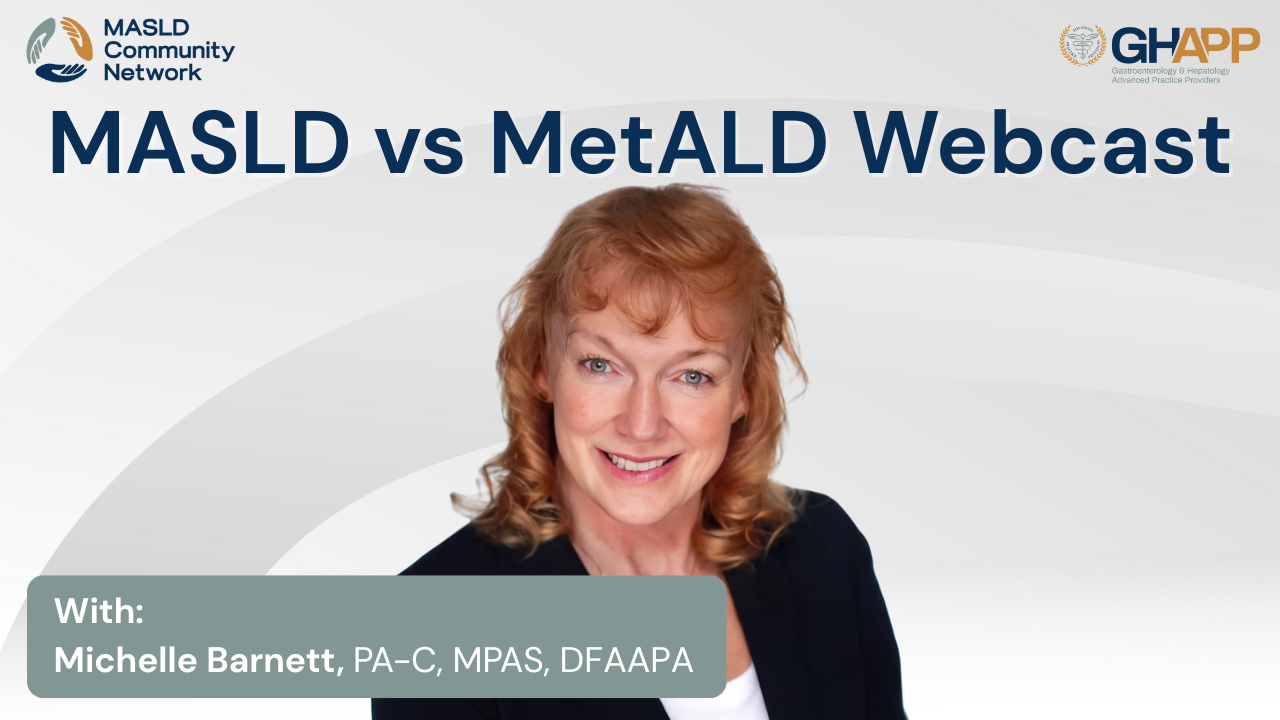
Webcast: MASLD vs MetALD With Michelle Barnett
November 2025
Join Michelle Barnett, PA-C for a concise, case-based update on the new steatotic liver disease nomenclature—MASLD, MASH, and MetALD—and what it means for risk stratification and management. She walks through calculating FIB-4, interpreting FibroScan (kPa/CAP), and quantifying alcohol exposure (e.g., PEth) to differentiate metabolic-predominant from alcohol-associated disease. You’ll learn practical next steps: lifestyle and Mediterranean diet counseling, structured exercise goals, when to consider Resmetirom for F3 fibrosis, and why HCC screening now extends to F3. Perfect for APPs and clinicians looking to apply 2023+ consensus guidance in everyday hepatology practice.
Watch Now
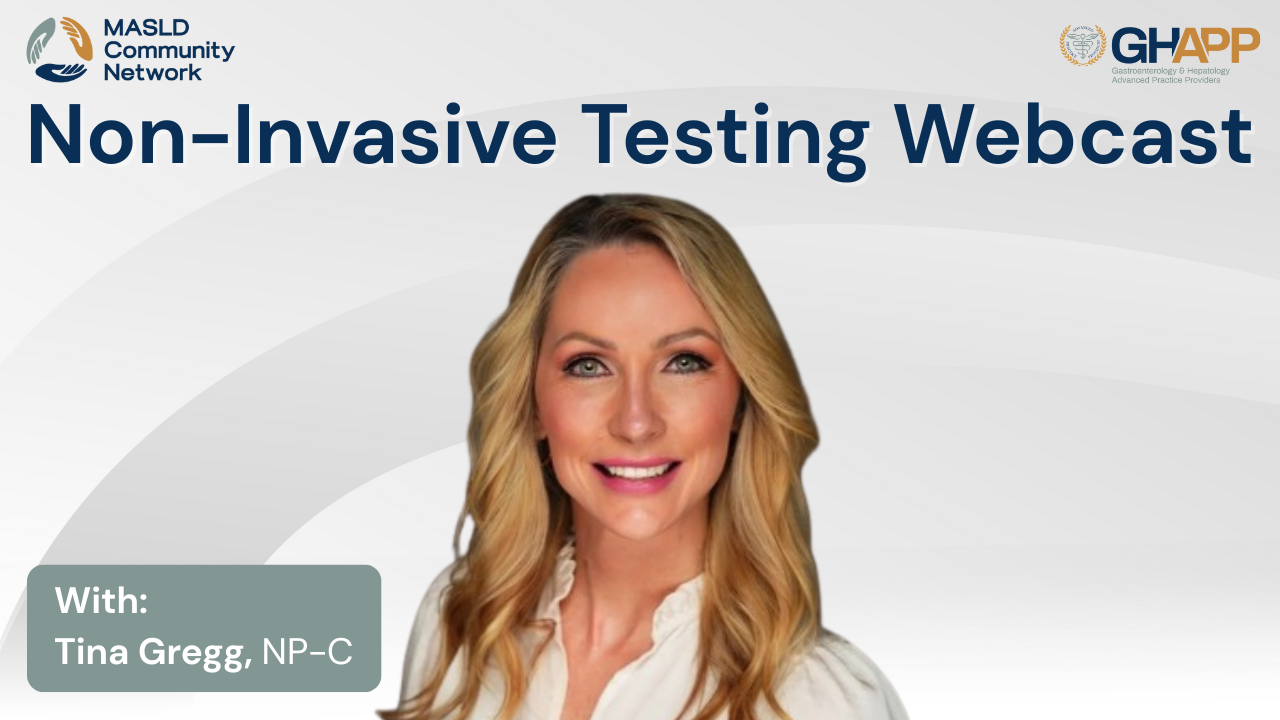
Webcast: Non-Invasive Testing With Tina Gregg
October 2025
In this session, Tina Gregg, NP-C, reviews non-invasive testing (NITs) for MASLD and MASH, using a real-world case to show how to assess risk and stage fibrosis without biopsy. Learn when to use FIB-4, ELF, FibroScan (VCTE), and MR elastography, how to interpret cutoffs, and when to refer to hepatology. Practical takeaways include triaging indeterminate FIB-4 results, recognizing test limitations, and counseling patients on lifestyle and follow-up. Presented via the GHAPP MASLD Community Network.
Watch Now