


Chat with MASLD AI

Hi, I am MASLD AI.
Suggested Questions :
MASLD AI 07:22 AM

 November 2025
In this educational session, Jordan Mayberry, PA-C, from Dallas, Texas, explores the evolving understanding of metabolic-associated steatotic liver disease (MASLD) and MetALD, where metabolic risk factors intersect with alcohol use. Through a detailed case study, she demonstrates how to interpret FibroScan results, calculate FIB-4, and apply PEth testing to assess alcohol intake. Jordan highlights the metabolic and inflammatory mechanisms driving liver fibrosis, explains how alcohol amplifies disease progression, and outlines current management strategies—focusing on weight loss, alcohol cessation, lifestyle changes, and the use of Resmetirom for advanced fibrosis. The discussion offers practical guidance for clinicians aiming to accurately diagnose and treat patients with MASLD and MetALD in everyday hepatology practice.
Related Webcast
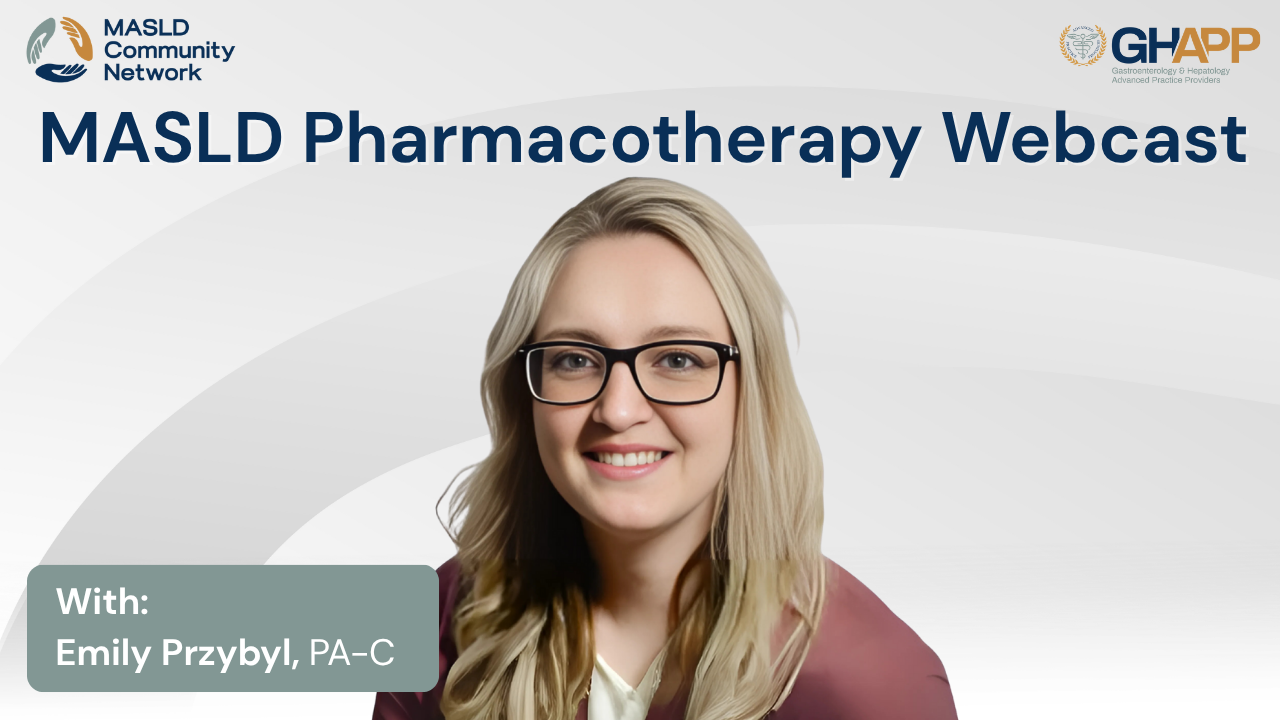
Webcast: MASLD Pharmacotherapy With Emily Przybyl
 October 2025
In this session, Emily Przybyl, PA-C from Erie County Medical Center in Buffalo, NY, explores current pharmacologic strategies for managing metabolic dysfunction–associated steatohepatitis (MASH) and metabolic dysfunction–associated steatotic liver disease (MASLD). She reviews the foundation of treatment—lifestyle modification, weight-loss interventions, and cardiovascular risk reduction—before detailing the evidence and clinical considerations for GLP-1 receptor agonists, vitamin E, pioglitazone, and the newly approved resmetirom. Emily discusses dosing strategies, histologic outcomes from major trials, and safety considerations including drug interactions, adverse effects, and monitoring recommendations. This presentation, part of the GHAPP MASLD & MASH Community Network and supported by Madrigal Pharmaceuticals, highlights how APPs can integrate emerging therapies into comprehensive, patient-centered management plans for MASLD and MASH.
Watch Now
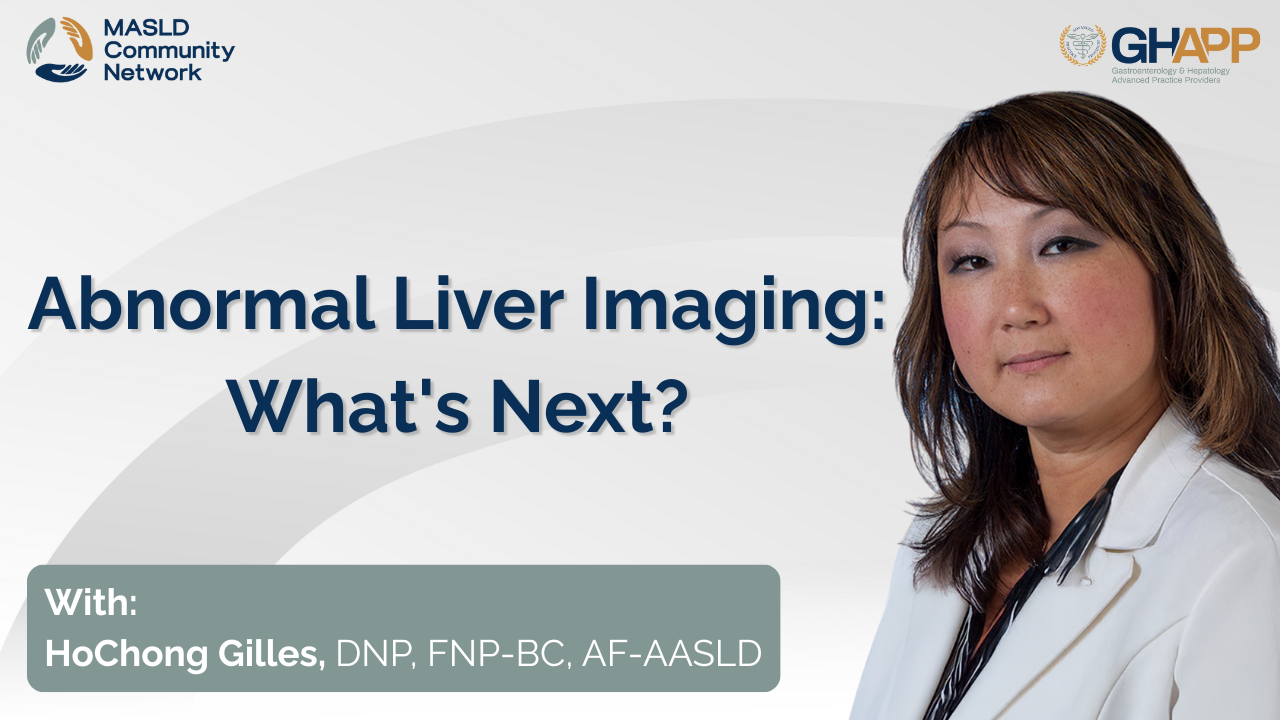
Live From GHAPP National: Abnormal Liver Imaging: What's Next?
November 2025
In this high-yield session, HoChong Gilles, NP from the Central Virginia VA Healthcare System, guides viewers through a practical approach to abnormal liver imaging and the challenge of incidental liver lesions. She reviews how to differentiate cystic versus solid liver lesions, outline key risk factors, and interpret enhancement patterns on ultrasound, CT, and MRI to distinguish benign findings—such as simple cysts, hemangiomas, FNH, and hepatic adenomas—from malignant lesions including hepatocellular carcinoma (HCC) and metastatic disease. Designed for APPs and clinicians who frequently encounter unexpected lesions on imaging, this concise overview provides clear strategies for knowing when to reassure, when to monitor, and when to escalate evaluation or referral.
Watch Now
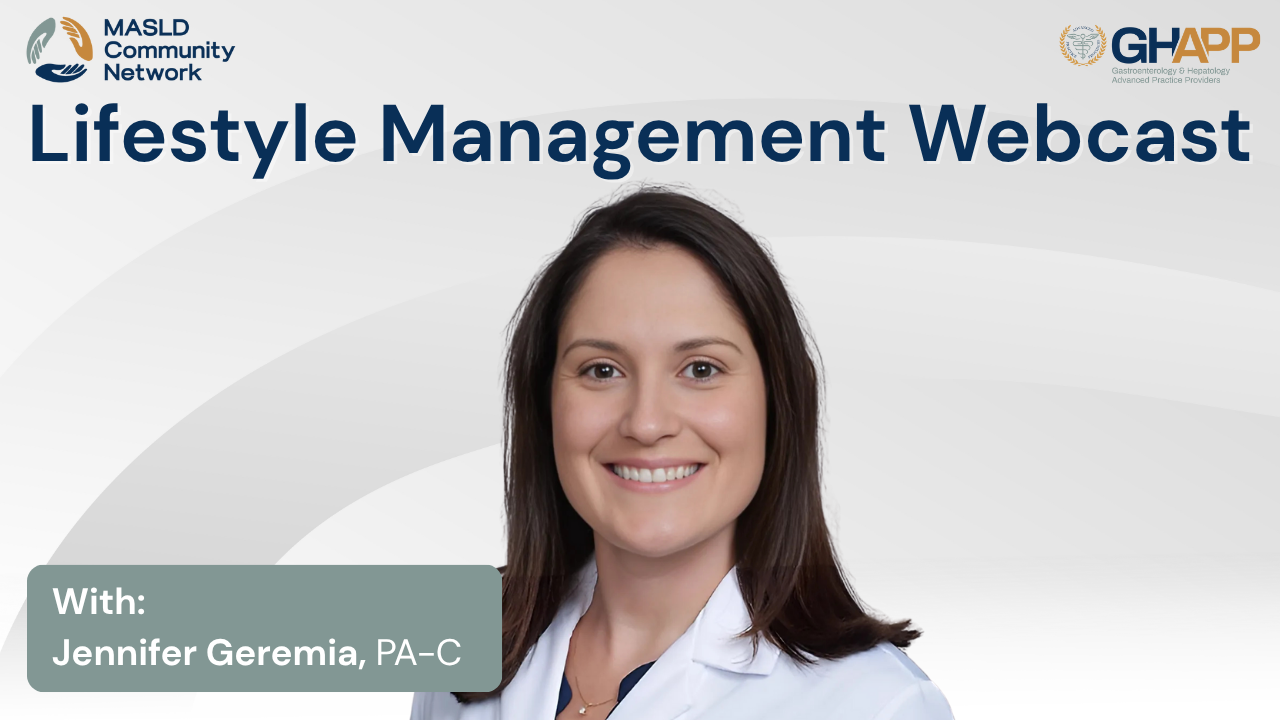
Webcast: Lifestyle Management With Jennifer Geremia
August 2025
In this GHAPP MASLD Community Network presentation, Jennifer Geremia, PA-C, from Brigham and Women’s Hospital in Boston, discusses the critical role of lifestyle modifications in managing MASLD (Metabolic Associated Steatotic Liver Disease) and MASH (Metabolic Associated Steatohepatitis). Using a case-based approach, she highlights how patients with obesity, type 2 diabetes, hypertension, and hyperlipidemia can benefit from evidence-based interventions including dietary changes, weight reduction, and physical activity. The session emphasizes the importance of achieving and maintaining 7–10% weight loss, the benefits of a Mediterranean diet, and combining aerobic and resistance exercise to improve liver health and reduce progression to advanced fibrosis or cirrhosis. Jennifer also explores the challenges of long-term adherence, the impact of genetic and metabolic risk factors, and strategies for engaging patients in realistic and sustainable lifestyle changes. This program underscores how early intervention and multidisciplinary care can prevent liver disease progression and improve outcomes for at-risk patients.
Watch Now
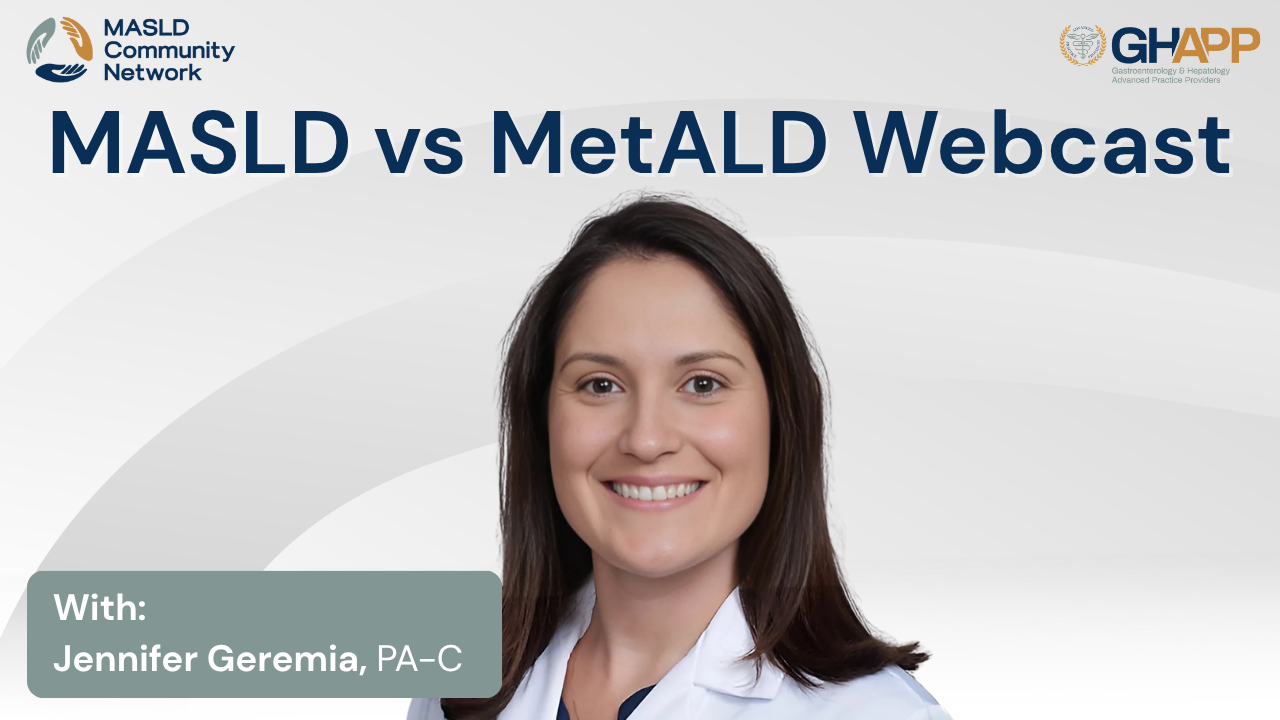
Webcast: MASLD vs MetALD With Jennifer Geremia
September 2025
In this GHAPP MASLD Community Network presentation, Jennifer Geremia, PA-C explains how to differentiate metabolic dysfunction–associated steatotic liver disease (MASLD) from metabolic dysfunction plus alcohol-associated liver disease (MetALD) and how to manage patients who sit on the MASLD–MetALD spectrum. Using a classic case (52-year-old with BMI 29.4, PCOS, hypertension, hyperlipidemia, ultrasound-confirmed steatosis, FibroScan 11.4 kPa [F3] and CAP 310), she shows how to combine history, “standard drink” counseling, AUDIT-C screening, and objective biomarkers like PEth to uncover under-reported alcohol use, quantify grams/day or week, and classify risk. You’ll learn practical algorithms for ruling out alternative etiologies, assessing cardiometabolic drivers, interpreting noninvasive tests, and estimating 5-year decompensation risk across MASLD, MetALD, and ALD. The session closes with actionable care steps: lifestyle and Mediterranean-style nutrition, exercise and weight-loss targets, strict alcohol cessation (and referral when appropriate), consideration of pharmacologic options in advanced fibrosis, and when to initiate HCC surveillance. Scan the QR code to confirm attendance and access more MASLD/MetALD education and resources.
Watch Now
Webcast: MASLD vs MetALD With Allysa Saggese
September 2025
In this MASLD Community Network session, Allysa Saggese, NP, from Weill Cornell Medicine, New York, walks through a real-world case to demystify the overlap between MASLD, MASH, and metabolic-alcohol related liver disease (MetALD). You’ll learn how to take a precise alcohol history, translate “standard drink” equivalents (≈14 g ethanol), and use objective biomarkers like PEth alongside FIB-4, FibroScan (kPa), ELF, CAP, and MRI elastography to stage disease accurately and catch discordant results. Allysa covers how alcohol can skew labs (ALT/AST, triglycerides, BP), why reducing/abstaining may change non-invasive testing thresholds, when to consider liver biopsy, and who qualifies for HCC surveillance. She also outlines treatment pillars—lifestyle optimization, cardiometabolic risk control, and appropriate pharmacotherapy (including where resmetirom fits and when to avoid it)—so clinicians can tailor care for patients spanning pure MASLD to MetALD. Watch to sharpen your staging, counseling, and monitoring strategy—and help patients make data-driven changes that improve outcomes.
Watch Now
Webcast: Comparing F3 and F4 Fibrosis With Maribeth Capuno
August 2025
Join Maribeth Capuno, DNP, from the Richmond VA Medical Center, for an insightful case-based discussion on F3 vs. F4 fibrosis staging in patients with Metabolic Dysfunction-Associated Steatotic Liver Disease (MASLD) and MASH, presented through the GHAPP MASLD/MASH Community Network and sponsored by Madrigal Pharmaceuticals. Using the fictional case of “Sam,” Maribeth demonstrates how to differentiate between F3 and F4 fibrosis using non-invasive tools like FIB-4, FibroScan, and the ELF test, while explaining their respective cutoffs and clinical implications. Learn how to stage MASLD accurately, when to consider MRI elastography or liver biopsy, and how to initiate evidence-based management strategies including lifestyle modification, GLP-1 therapy, and the newly approved medication Resmetirom (Rezdiffra). The session highlights the importance of HCC surveillance, portal hypertension screening, and the nuances in monitoring between F3 and F4 fibrosis stages. With a strong emphasis on practical, guideline-aligned hepatology care, this video provides essential insights for clinicians managing the growing MASLD population.
Watch Now
Webcast: MASLD Pharmacotherapy With Sherona Bau
July 2025
In this dynamic and highly informative session, Sherona Bau, NP, presents a comprehensive overview of pharmacotherapy in MASLD and MASH, breaking down current treatment strategies and emerging therapies for patients with metabolic dysfunction-associated steatotic liver disease. This presentation, part of the MASLD/MASH Community Network, begins by contextualizing the recent nomenclature shift from NAFLD/NASH to MASLD/MASH and its clinical implications. Sherona explores lifestyle intervention targets, including Mediterranean diet, weight loss goals based on fibrosis stage, and the role of GLP-1 and GIP receptor agonists in improving liver health. She highlights the ESSENCE trial results for semaglutide, discusses the only FDA-approved therapy to date—resmetirom (Rezdiffra)—and explains its mechanism of action via thyroid hormone receptor beta activation. The session dives deep into efficacy data from the MAESTRO-NASH trial, side effect profiles, drug–drug interactions, and monitoring recommendations. She also previews a pipeline of promising agents in phase 2 and 3 trials—including tirzepatide (GLP-1/GIP), cotadutide (GLP-1/GR), pemvidutide (GLP-1/GIP), and retatrutide (GLP-1/GIP/GR)—offering insight into what’s next in the evolving treatment landscape. This is a must-watch for hepatology and endocrinology clinicians focused on the future of fatty liver management.
Watch Now
Webcast: MASLD vs MetALD With Melissa Franco
November 2025
Learn how to evaluate and manage patients with MASLD, MASH, and MetALD in this educational session led by Melissa Franco, PA-C, from the University of Miami. Using a real-world case, Melissa reviews how to identify metabolic-dysfunction–associated steatotic liver disease, distinguish it from alcohol-associated liver injury, and apply non-invasive testing tools such as FIB-4 and transient elastography to stratify fibrosis risk. The presentation explores how alcohol intake, metabolic risk factors, and obesity interact to accelerate liver inflammation and fibrosis, and discusses objective biomarkers like PEth testing to detect alcohol use. Viewers will gain practical insight into risk assessment, lifestyle modification, and management strategies for patients with combined metabolic and alcohol-related liver disease. For more hepatology education and resources, visit the GHAPP MASLD & MASH Community Network.
Watch Now
Live From GHAPP National: Autoimmune Hepatitis: How I Approach It
November 2025
Join Lindsay Yoder, PA-C from Indiana University, for a practical walkthrough on how to evaluate and manage autoimmune hepatitis (AIH). This concise session covers key clinical clues, diagnostic criteria, common patient questions, and real-world approaches to treatment—from steroids and azathioprine to mycophenolate, tacrolimus, and emerging steroid-sparing strategies. Learn how to recognize AIH presentations, set realistic expectations for biochemical remission, manage intolerance and relapse, and tailor long-term therapy for better outcomes. A quick, high-yield guide for clinicians looking to strengthen their approach to autoimmune hepatitis.
Watch Now
Webcast: Non-Invasive Testing With Maly Tiev
September 2025
Maly Tiev, NP, NYU Langone Health, shares a practical, case-based walkthrough of non-invasive testing (NITs) for MASLD/MASH—showing how to move from initial risk identification to confident staging and follow-up without a biopsy in most patients. Using Albert’s case, a 65-year-old with steatosis and mild ALT elevation, she explains how to apply FIB-4 first, then layer in FibroScan/VCTE with Liver Stiffness (kPa) and CAP for fat quantification, plus when to order ELF or MRI elastography. You’ll learn reliability checks for FibroScan, common confounders, insurance/operational tips for MRE, and an easy algorithm for primary care/endocrine clinics: start with FIB-4 → triage by cutoffs → use VCTE/ELF → refer when intermediate or high risk. She closes with clear next steps for low-risk patients—lifestyle modification, cardiometabolic optimization, and repeating NITs in 2–3 years—and when to escalate to hepatology for advanced disease.
Watch Now