


Chat with MASLD AI

Hi, I am MASLD AI.
Suggested Questions :
MASLD AI 07:15 AM

 October 2025

Milly Ng explores the intersection of metabolic dysfunction–associated steatotic liver disease (MASLD) and alcohol-related liver disease (ALD)—known as MetALD. Through a real-world patient case, she explains how metabolic risk factors like obesity, hypertension, and dyslipidemia interact with alcohol use to accelerate liver damage, fibrosis, and HCC risk. Learn how to identify and manage MetALD using FibroScan, PEth testing, and evidence-based strategies including lifestyle modification, alcohol cessation, and emerging therapies like resmetirom.
Related Webcast
Webcast: MASLD Pharmacotherapy With Ann Moore
 September 2025
Ann Moore, NP, Arizona Liver Health, delivers a practical overview of MASLD pharmacotherapy for the GHAPP MASLD Community Network, sponsored by Madrigal Pharmaceuticals. She covers the treatment toolbox—from lifestyle foundations (Mediterranean-style nutrition, sustainable weight loss, physical activity) and obesity/diabetes therapies (GLP-1 and GLP-1/GIP agents, bariatric surgery) to liver-directed options like vitamin E (in select non-diabetic patients), pioglitazone (for type 2 diabetes), and the THR-β agonist resmetirom for adults with non-cirrhotic MASH and F2–F3 fibrosis. You’ll learn when to stage with non-invasive tests (FibroScan®, ELF, MRI-PDFF), how to pair systemic and liver-targeted therapies, key safety and drug–drug considerations, and practical monitoring tips to keep patients on track. Ideal for APPs and GI/hepatology clinicians seeking an up-to-date, patient-centered roadmap to slow fibrosis and improve liver outcomes.
Watch Now
Webcast: MASLD Pharmacotherapy With Sherona Bau
July 2025
In this dynamic and highly informative session, Sherona Bau, NP, presents a comprehensive overview of pharmacotherapy in MASLD and MASH, breaking down current treatment strategies and emerging therapies for patients with metabolic dysfunction-associated steatotic liver disease. This presentation, part of the MASLD/MASH Community Network, begins by contextualizing the recent nomenclature shift from NAFLD/NASH to MASLD/MASH and its clinical implications. Sherona explores lifestyle intervention targets, including Mediterranean diet, weight loss goals based on fibrosis stage, and the role of GLP-1 and GIP receptor agonists in improving liver health. She highlights the ESSENCE trial results for semaglutide, discusses the only FDA-approved therapy to date—resmetirom (Rezdiffra)—and explains its mechanism of action via thyroid hormone receptor beta activation. The session dives deep into efficacy data from the MAESTRO-NASH trial, side effect profiles, drug–drug interactions, and monitoring recommendations. She also previews a pipeline of promising agents in phase 2 and 3 trials—including tirzepatide (GLP-1/GIP), cotadutide (GLP-1/GR), pemvidutide (GLP-1/GIP), and retatrutide (GLP-1/GIP/GR)—offering insight into what’s next in the evolving treatment landscape. This is a must-watch for hepatology and endocrinology clinicians focused on the future of fatty liver management.
Watch Now
Webcast: MASLD vs MetALD Webcast
October 2025
In this educational presentation, Emily Przybyl, PA-C, from Erie County Medical Center, explores the overlap between Metabolic Dysfunction–Associated Steatotic Liver Disease (MASLD) and MetALD, emphasizing how metabolic risk factors and alcohol intake accelerate liver injury and fibrosis. Presented through the GHAPP MASLD Community Network and supported by Madrigal Pharmaceuticals, this session uses a real-world case study to illustrate diagnostic evaluation, non-invasive testing (FibroScan, CAP score, FIB-4), and the role of PEth testing in objectively assessing alcohol use. Emily also highlights the importance of dietary changes, Mediterranean-style nutrition, weight reduction, and alcohol abstinence in preventing progression to cirrhosis and improving patient outcomes.
Watch Now
Webcast: Lifestyle Management With Milly Ng
August 2025
Join Milly Ng, a hepatology nurse practitioner at Tufts Medical Center in Boston, for an evidence-based session on lifestyle management for MASLD and MASH, presented through the GHAPP MASLD Community Network and sponsored by Madrigal Pharmaceuticals. Through the case of "Albert," a patient with steatosis and metabolic risk factors, Milly highlights the importance of personalized counseling and non-invasive testing like FIB-4 and FibroScan to assess fibrosis risk. She reviews how Metabolic Dysfunction-Associated Steatotic Liver Disease (MASLD) and its progressive form, MASH, can be reversed through diet, exercise, and weight loss, particularly before fibrosis advances to cirrhosis. Learn how to tailor dietary guidance to a patient's cultural background, socioeconomic status, and personal goals, and understand how central obesity and insulin resistance drive disease progression. Milly also reviews the genetic and environmental factors influencing steatosis, why aerobic training may be more effective than resistance workouts for liver health, and how validated tools like the EDAS (Exercise and Diet Adherence Scale) can track patient progress. This session empowers primary care and hepatology providers to deliver patient-centered lifestyle interventions that can prevent liver disease progression and reduce cardiometabolic risk.
Watch Now
Webcast: Comparing F3 and F4 Fibrosis With Kristina Tuesday Werner
October 2025
Tuesday Werner, NP, explains why accurately identifying F3 vs F4 fibrosis is critical in patients with MASLD/MASH. Using real patient case comparisons, she highlights how non-invasive tests like FIB-4, FibroScan, and ELF help determine disease severity, guide treatment, and reduce the need for biopsy. Tuesday reviews how care strategies differ—F3 patients focus on aggressive metabolic control and fibrosis monitoring, while F4 (cirrhosis) requires HCC surveillance, closer specialist follow-up, and potential transplant evaluation.
Watch Now
Webcast: Non-Invasive Testing With Erin Tanner
July 2025
In this educational session from the GHAPP MASLD & MASH Community Network, Erin Tanner, PA-C from Gastro Health in Birmingham, Alabama, presents a practical overview of non-invasive testing (NIT) options for evaluating and managing MASLD (Metabolic dysfunction-associated steatotic liver disease) and MASH (Metabolic dysfunction-associated steatohepatitis). Using a patient case study, Erin explores how clinicians can effectively utilize tools like FIB-4, FibroScan® (VCTE and CAP), ELF, MRE, and other emerging imaging and serum biomarkers to assess hepatic steatosis and fibrosis without the need for liver biopsy. The talk breaks down the pros, cons, and clinical accuracy of various NITs—including shear wave elastography, MRI-PDFF, and proprietary serum markers—and offers guidance on how to apply these tools in real-world hepatology and primary care settings. Special attention is given to identifying patients with metabolic risk factors, interpreting indeterminate FIB-4 scores, and knowing when to refer patients for further hepatology evaluation. Whether you’re new to liver disease management or looking to update your MASLD/MASH care pathways, this session offers clarity on how to stratify fibrosis risk and make informed clinical decisions using non-invasive diagnostics.
Watch Now
Webcast: MASLD vs MetALD With Suzanne Robertazzi
October 2025
In this educational session, Suzanne Robertazzi, DNP, from the Washington DC VA Medical Center, explores the evolving understanding of metabolic dysfunction-associated steatotic liver disease (MASLD) and metabolic-alcohol related liver disease (MetALD). Using a real-world case study, she walks through diagnostic clues, risk factors, and management strategies for patients with metabolic and alcohol-related components of liver disease. Viewers will learn how to interpret FibroScan results, assess alcohol intake using biomarkers such as PEth, and understand how metabolic factors like hypertension, dyslipidemia, and insulin resistance accelerate disease progression. Suzanne also reviews how to distinguish MASLD from MetALD, when to consider HCC screening, and practical steps to support patients through alcohol cessation, weight loss, and lifestyle modification. This presentation is part of the MASLD Community Network lecture series, offering APPs and hepatology professionals key insights into accurate diagnosis, patient education, and comprehensive liver health management.
Watch Now
Webcast: MASLD vs MetALD With Melissa Franco
November 2025
Learn how to evaluate and manage patients with MASLD, MASH, and MetALD in this educational session led by Melissa Franco, PA-C, from the University of Miami. Using a real-world case, Melissa reviews how to identify metabolic-dysfunction–associated steatotic liver disease, distinguish it from alcohol-associated liver injury, and apply non-invasive testing tools such as FIB-4 and transient elastography to stratify fibrosis risk. The presentation explores how alcohol intake, metabolic risk factors, and obesity interact to accelerate liver inflammation and fibrosis, and discusses objective biomarkers like PEth testing to detect alcohol use. Viewers will gain practical insight into risk assessment, lifestyle modification, and management strategies for patients with combined metabolic and alcohol-related liver disease. For more hepatology education and resources, visit the GHAPP MASLD & MASH Community Network.
Watch Now
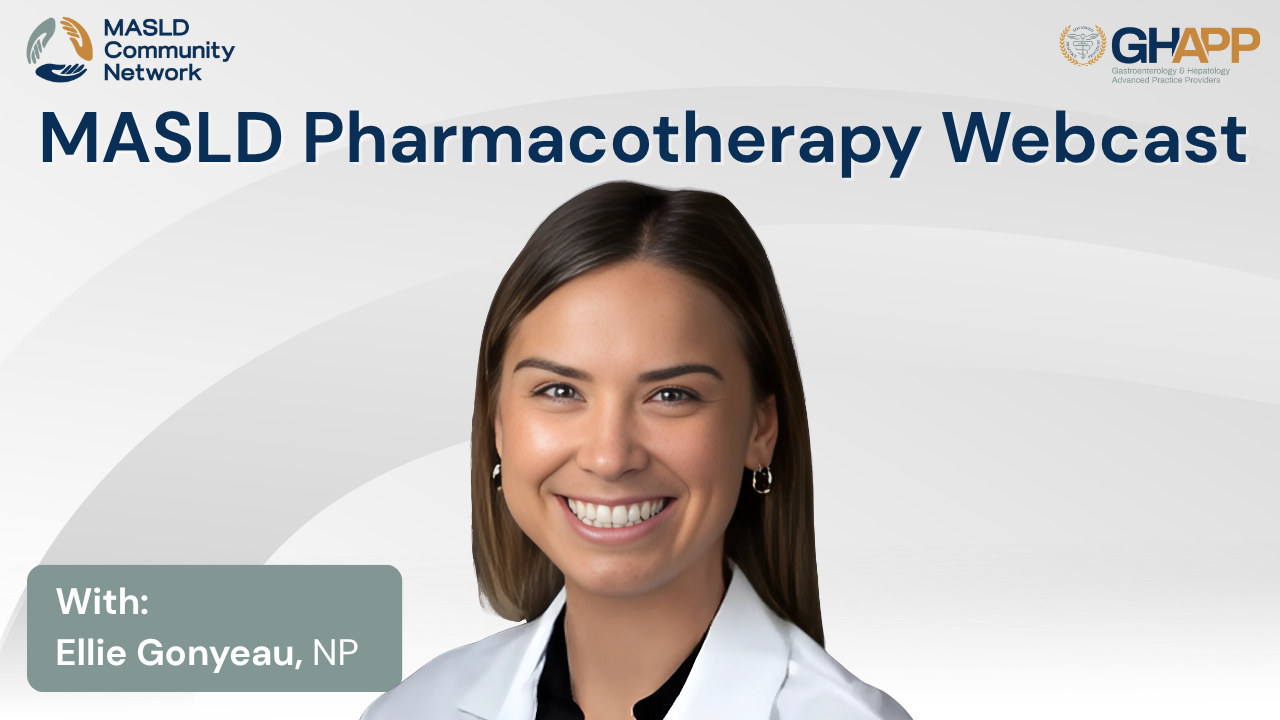
Webcast: MASLD Pharmacotherapy With Ellie Gonyeau
September 2025
In this practical, clinician-focused talk, Ellie Gonyeau, NP, walks through a streamlined pharmacotherapy framework for MASLD/MASH—anchored on three pillars: obesity management, cardiometabolic risk reduction (T2D, hypertension, dyslipidemia), and liver-directed therapy. She reviews where GLP-1 receptor agonists fit (weight loss, glycemic control, peri-procedure considerations), summarizes evidence and patient selection for high-dose vitamin E and pioglitazone, and explains the role of resmetirom—the first FDA-approved therapy for non-cirrhotic MASH with F2–F3 fibrosis—its liver-selective THR-β mechanism, pivotal trial outcomes, common AEs, and drug-interaction/ statin considerations. You’ll also learn how to monitor and restage using non-invasive tests (FibroScan kPa/CAP, ELF, labs), set measurable lifestyle goals, and navigate real-world questions around coverage, testing cadence, and treatment duration—so you can confidently tailor therapy and improve outcomes for patients across the MASLD/MASH spectrum.
Watch Now
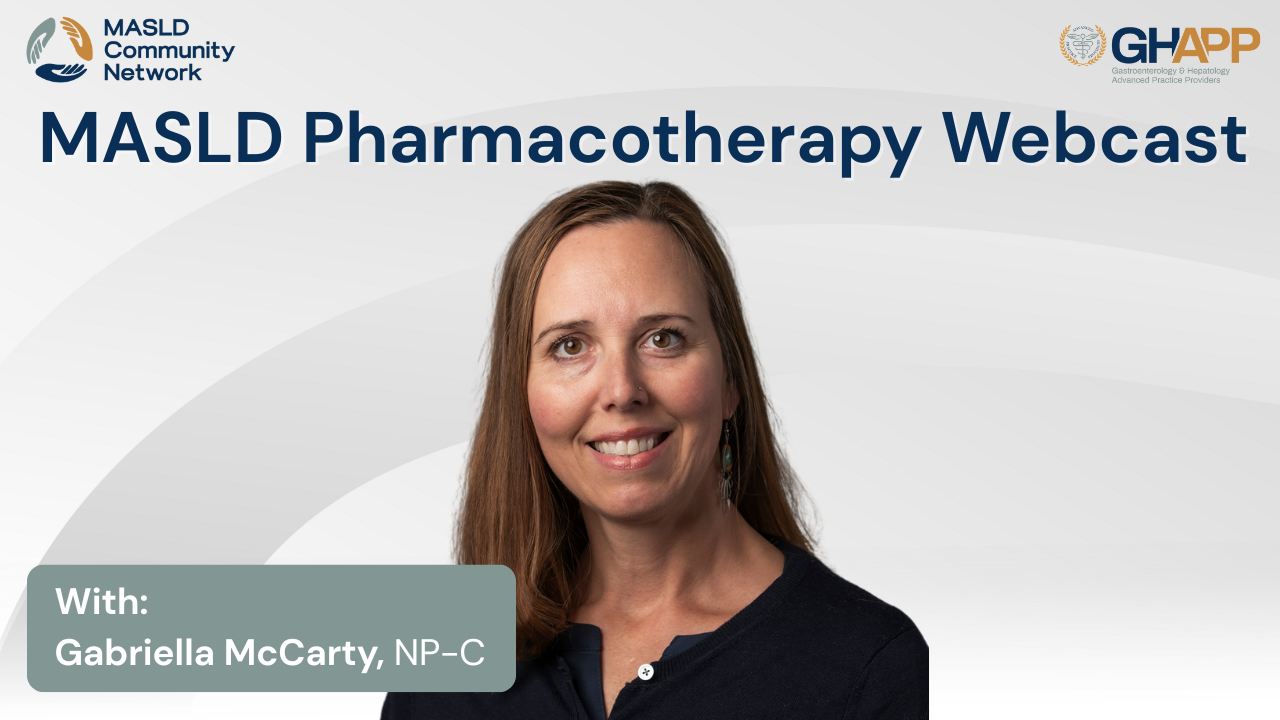
Webcast: MASLD Pharmacotherapy With Gabriella McCarty
August 2025
In this presentation, Gabriella McCarty, NP-C at Oshi Health, explores the evolving management of Metabolic Dysfunction–Associated Steatotic Liver Disease (MASLD) and MASH with a focus on pharmacotherapy. Drawing from her 26 years in gastroenterology, IBD, and hepatology, she explains how fatty liver disease is often detected incidentally and highlights the importance of early diagnosis and patient education. Gabriella reviews the three-pillar approach to treatment—lifestyle and weight loss strategies, cardiovascular risk reduction, and emerging liver-directed therapies. She discusses the role of GLP-1 receptor agonists, Vitamin E, Pioglitazone, and the first FDA-approved therapy, Resmetirom, detailing their mechanisms, benefits, and safety considerations. With insights from the MAESTRO-NASH trial and real-world experience using non-invasive tests like FibroScan, CAP scores, and ELF testing, this session provides practical guidance for clinicians managing MASLD/MASH and preventing disease progression to cirrhosis or hepatocellular carcinoma.
Watch Now