


Chat with MASLD AI

Hi, I am MASLD AI.
Suggested Questions :
MASLD AI 07:06 AM

 October 2025

In this educational session, Oyin Penny, FNP, from Premier Gastroenterology of Kansas City, discusses the overlap between MASLD and MetALD, highlighting how metabolic risk factors and alcohol intake accelerate liver injury and fibrosis. Presented through the GHAPP MASLD Community Network and supported by Madrigal Pharmaceuticals, this talk uses a real-world case study to explain diagnostic tools like FibroScan, CAP score, and PEth testing, along with clinical criteria for distinguishing MASLD, MetALD, and ALD. Key management strategies include Mediterranean diet, weight loss, alcohol abstinence, and monitoring for advanced fibrosis and HCC risk.
Related Webcast
Webcast: MASLD Pharmacotherapy With Tina Gregg
 November 2025
In this educational presentation, Tina Gregg, NP-C breaks down the evolving pharmacotherapy landscape for MASLD and MASH, emphasizing a holistic, metabolic-centered approach to patient management. Tina reviews key treatment pillars—including weight loss, cardiovascular risk reduction, and direct NASH-targeted therapy—highlighting evidence-based strategies such as lifestyle modification, GLP-1 receptor agonists, pioglitazone, vitamin E, and the first FDA-approved therapy for MASH with F2–F3 fibrosis, resmetirom. She explains how these interventions improve hepatic histology, reduce fibrosis, and address comorbidities like diabetes and obesity. The session also explores data from the MAESTRO-NASH trial, drug-drug interaction considerations, and ongoing monitoring guidance for resmetirom. Whether you’re managing patients in hepatology, GI, or primary care, this discussion offers a comprehensive overview of current and emerging medical therapies shaping the future of metabolic liver disease care.
Watch Now
Webcast: MASLD Pharmacotherapy With Chantil Jeffreys
September 2025
In this MASLD Community Network webcast, Chantil Jeffreys, FNP, walks through a practical framework for pharmacotherapy in MASLD/MASH—from lifestyle-first approaches to the evolving role of GLP-1 receptor agonists and bariatric/endoscopic options. She clarifies common misconceptions (e.g., statins are safe—and beneficial—for patients with fatty liver), reviews evidence and real-world considerations for vitamin E and pioglitazone, and explains where resmetirom (Rezdiffra) fits today for non-cirrhotic MASH with F2–F3 fibrosis—including monitoring, drug–drug interactions, and documentation tips that support payer approval. The session also covers cardiovascular risk reduction, peri-procedure guidance for GLP-1s, and practical strategies for staging and follow-up so clinicians can confidently personalize therapy and improve outcomes.
Watch Now
Webcast: MASLD vs MetALD Webcast
October 2025
In this educational presentation, Emily Przybyl, PA-C, from Erie County Medical Center, explores the overlap between Metabolic Dysfunction–Associated Steatotic Liver Disease (MASLD) and MetALD, emphasizing how metabolic risk factors and alcohol intake accelerate liver injury and fibrosis. Presented through the GHAPP MASLD Community Network and supported by Madrigal Pharmaceuticals, this session uses a real-world case study to illustrate diagnostic evaluation, non-invasive testing (FibroScan, CAP score, FIB-4), and the role of PEth testing in objectively assessing alcohol use. Emily also highlights the importance of dietary changes, Mediterranean-style nutrition, weight reduction, and alcohol abstinence in preventing progression to cirrhosis and improving patient outcomes.
Watch Now
Webcast: Comparing F3 and F4 Fibrosis With Jessica Crimaldi
August 2025
In this educational session, Jessica Crimaldi, a nurse practitioner at Cleveland Clinic with nearly a decade of experience in gastroenterology and hepatology, walks through real-world cases comparing patients with F3 fibrosis and F4 fibrosis. She reviews how to assess disease severity using non-invasive tests like FIB-4, FibroScan, CAP scores, and ELF tests, and explains how clinical findings such as platelets, bilirubin, and INR can guide staging. Jessica highlights the differences in management between patients with advanced fibrosis versus cirrhosis, including the role of lifestyle modifications, GLP-1 therapy, statins, blood pressure control, and Resmetirom for eligible F2/F3 patients. She also discusses the importance of HCC surveillance, portal hypertension evaluation, esophageal varices screening, and long-term monitoring in cirrhosis care. This case-based learning approach offers practical insights into fatty liver disease, MASLD/MASH progression, and optimizing patient outcomes through accurate staging and tailored treatment strategies.
Watch Now
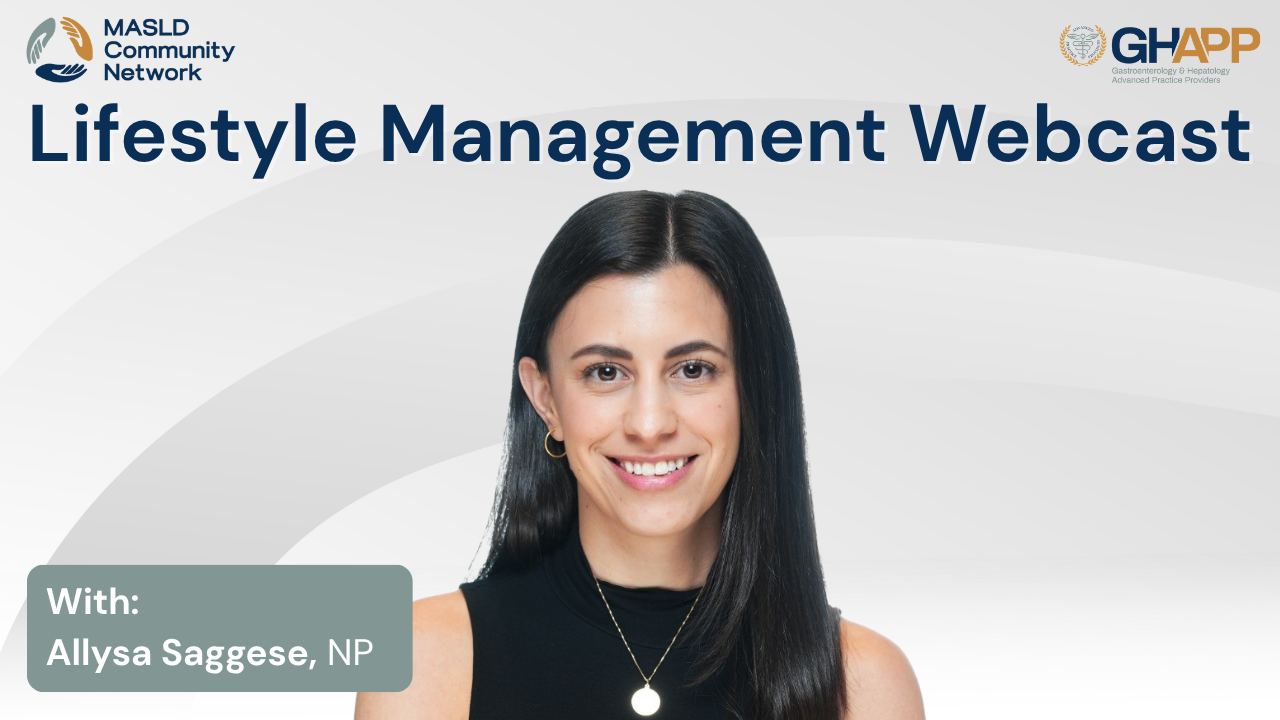
Webcast: Lifestyle Management With Allysa Saggese
August 2025
Join Allysa Saggese, NP, from Weill Cornell Medicine in New York City, for an insightful and practical discussion on lifestyle management for MASLD and MASH, presented through the GHAPP MASLD/MASH Community Network, sponsored by Madrigal Pharmaceuticals. In this case-based presentation, Allysa walks viewers through the non-pharmacologic strategies used to manage Metabolic Dysfunction-Associated Steatotic Liver Disease (MASLD), highlighting the role of nutrition, physical activity, and patient-centered counseling. Using a real-world example of a 65-year-old patient with obesity, diabetes, and steatosis, Allysa demonstrates how to assess fibrosis risk through non-invasive testing like FIB-4 and FibroScan, and explains how lifestyle modifications remain central to slowing disease progression—even in the era of advanced therapeutics. The session explores the importance of motivational interviewing, cultural dietary preferences, and how to structure effective, individualized conversations around reducing sugar intake, increasing movement at home, and achieving sustainable 5–10% weight loss to improve liver histology. Allysa also breaks down the metabolic interplay between central adiposity, insulin resistance, and liver inflammation, and shares counseling tips to build patient trust and long-term engagement. Whether you're a GI or hepatology provider, this session delivers real-world guidance to help empower patients to reverse early liver damage through everyday lifestyle changes.
Watch Now
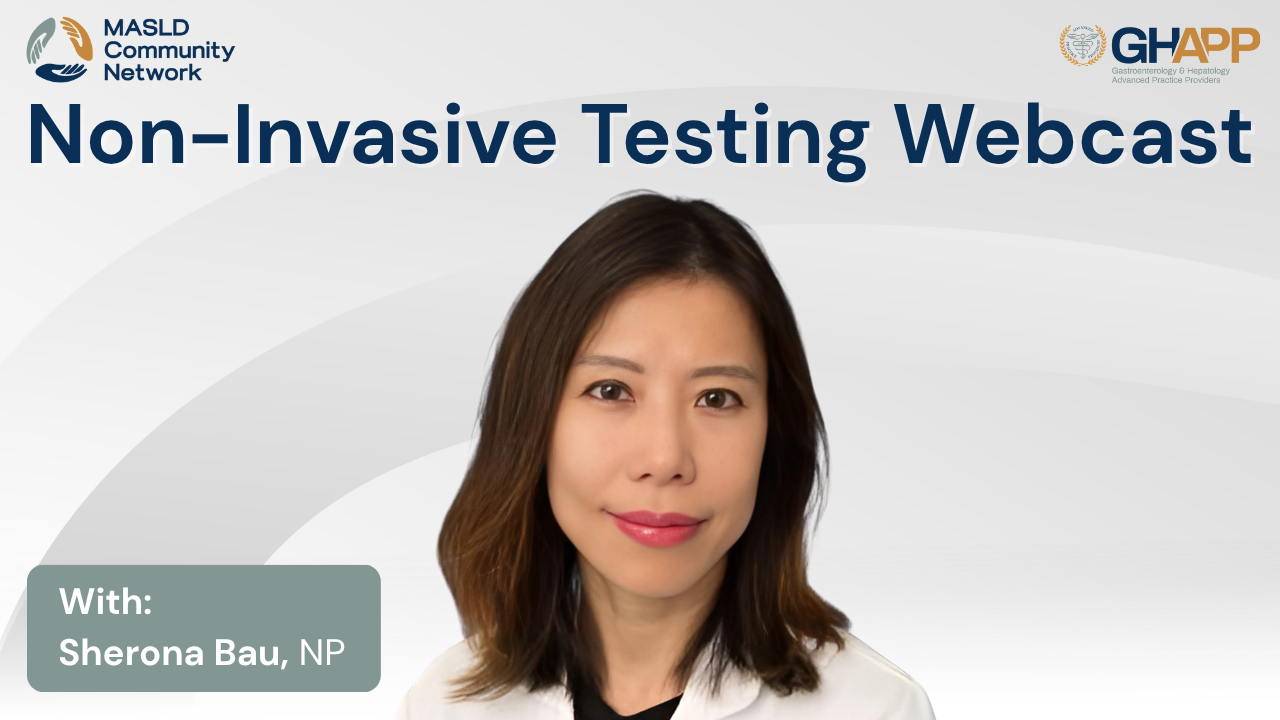
Webcast: Non-Invasive Testing With Sherona Bau
July 2025
In this engaging and highly informative GHAPP MASLD Community Network session, Sherona Bau, NP, walks attendees through a practical overview of non-invasive testing (NIT) for evaluating liver health in patients with MASLD (Metabolic dysfunction-associated steatotic liver disease) and MASH (Metabolic dysfunction-associated steatohepatitis). Drawing on real-world clinical experience, Sherona explains why non-invasive testing is essential for identifying fibrosis risk in a population where liver steatosis is prevalent in up to 30% of U.S. adults. Through the case of a 65-year-old Hispanic male named Albert, Sherona demonstrates how to interpret and apply tools such as FIB-4, FibroScan (VCTE and CAP score), ELF (Enhanced Liver Fibrosis) test, and MR Elastography (MRE). She highlights their respective strengths, limitations, clinical cut-offs, and insurance-related considerations. The session also covers when to order tests, how to assess data quality (e.g., IQR/median ratio in VCTE), and when to escalate care to hepatology or cardiology. Whether you are a primary care provider, endocrinologist, or hepatology specialist, this talk delivers practical algorithms and decision-making pathways for managing MASLD, improving early detection of fibrosis and cirrhosis, and integrating cardiovascular risk assessment into liver care. Sherona also emphasizes the importance of alcohol use history, metabolic syndrome risk factors, and annual NIT follow-up in patients at risk for disease progression.
Watch Now
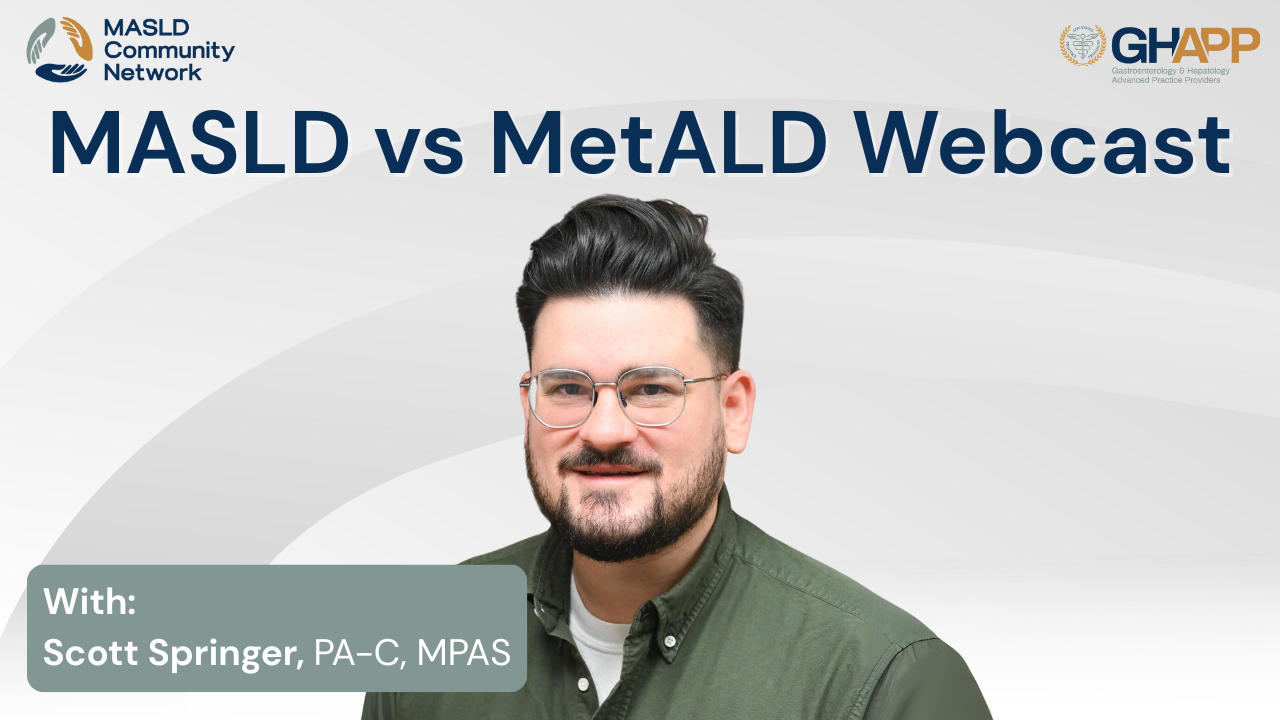
Webcast: MASLD vs MetALD With Scott Springer
October 2025
In this educational session, Scott Springer, PA-C, from Erie County Medical Center, discusses the intersection of Metabolic Dysfunction–Associated Steatotic Liver Disease (MASLD) and MetALD—a condition involving both metabolic dysfunction and alcohol-related liver injury. Presented through the GHAPP MASLD Community Network and supported by Madrigal Pharmaceuticals, this talk highlights diagnostic challenges, alcohol-use quantification, and the importance of objective biomarkers like PEth testing for accurate classification. Using a real patient case, Scott explains how metabolic risk factors and alcohol intake synergistically accelerate fibrosis, and how clinicians can apply non-invasive tests (FibroScan, ELF, FIB-4) and counseling strategies to improve patient outcomes.
Watch Now
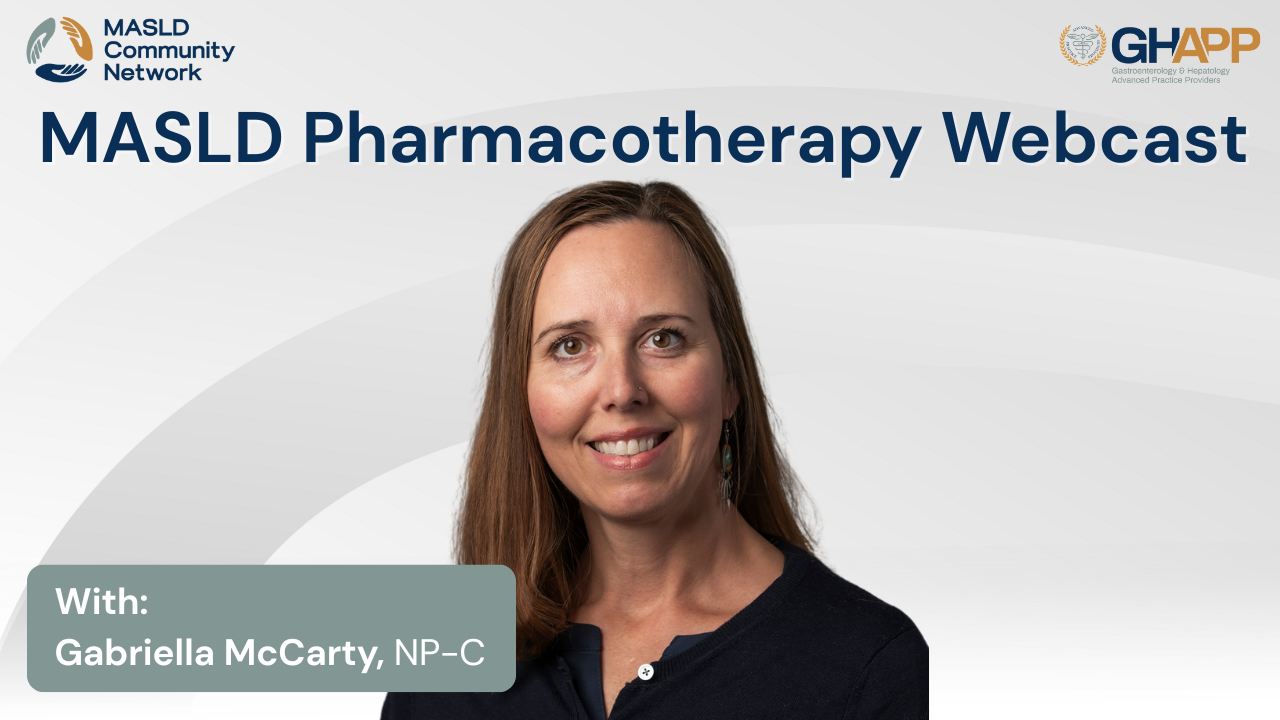
Webcast: MASLD Pharmacotherapy With Gabriella McCarty
August 2025
In this presentation, Gabriella McCarty, NP-C at Oshi Health, explores the evolving management of Metabolic Dysfunction–Associated Steatotic Liver Disease (MASLD) and MASH with a focus on pharmacotherapy. Drawing from her 26 years in gastroenterology, IBD, and hepatology, she explains how fatty liver disease is often detected incidentally and highlights the importance of early diagnosis and patient education. Gabriella reviews the three-pillar approach to treatment—lifestyle and weight loss strategies, cardiovascular risk reduction, and emerging liver-directed therapies. She discusses the role of GLP-1 receptor agonists, Vitamin E, Pioglitazone, and the first FDA-approved therapy, Resmetirom, detailing their mechanisms, benefits, and safety considerations. With insights from the MAESTRO-NASH trial and real-world experience using non-invasive tests like FibroScan, CAP scores, and ELF testing, this session provides practical guidance for clinicians managing MASLD/MASH and preventing disease progression to cirrhosis or hepatocellular carcinoma.
Watch Now
Webcast: MASLD Pharmacotherapy With Lisa Richards
August 2025
Join Lisa Richards from UC San Diego Health, for a comprehensive overview of MASLD Pharmacotherapy as part of the GHAPP MASLD Community Network, proudly sponsored by Madrigal Pharmaceuticals. This educational session explores the evolving treatment landscape for Metabolic Dysfunction-Associated Steatotic Liver Disease (MASLD) and MASH (Metabolic Dysfunction-Associated Steatohepatitis), including the shift from exclusive reliance on lifestyle interventions and comorbidity optimization to the introduction of targeted pharmacologic therapies. Lisa reviews the role of GLP-1 receptor agonists, such as semaglutide, and the ESSENCE trial results demonstrating significant improvements in MASH and liver fibrosis. She also outlines the clinical considerations and limitations of legacy treatments like vitamin E and pioglitazone, based on data from the PIVENS trial. The highlight of the session is a detailed exploration of resmetirom (Rezdiffra)—the first FDA-approved therapy for non-cirrhotic NASH with moderate to advanced fibrosis (F2–F3). Lisa reviews key findings from the MAESTRO-NASH trial, including improvements in fibrosis and MASH resolution, and discusses real-world implementation strategies, including non-invasive monitoring tools (FibroScan, ELF, MRI-PDFF), statin dose adjustments, and managing drug–drug interactions. This session equips hepatology and GI providers with the tools to personalize MASH care, navigate insurance and safety considerations, and deliver cutting-edge, evidence-based treatment to patients with MASLD.
Watch Now
Live From GHAPP National: MASH: The Latest and Greatest of Management
November 2025
In this expert-led session, Allysa Saggese, NP, at Weill Cornell Medicine, breaks down the latest evidence and evolving best practices in the diagnosis and management of MASLD and MASH. She explains the 2023 nomenclature changes, the full spectrum of steatotic liver disease, and how metabolic dysfunction drives both MASLD and inflammatory MASH. Allysa reviews practical diagnostic pathways—including non-invasive tests like FIB-4, ELF, FibroScan, and elastography—and highlights why MASLD/MASH should always be evaluated in the broader context of metabolic disorders such as diabetes, obesity, and dyslipidemia. She also outlines the foundation of lifestyle-based treatment, offering real-world communication strategies to help patients succeed with diet, activity, and weight management goals. The talk covers major therapeutic advances, including the first FDA-approved MASH therapy, resmetirom (a THR-β agonist), as well as the growing role of GLP-1 receptor agonists like semaglutide in improving metabolic drivers of liver inflammation and fibrosis. Allysa discusses dosing, titration, safety considerations, expected side effects, and what clinicians should know when co-managing cardiometabolic conditions. She closes with insights on future MASH drug development, combination therapy approaches, and practical pearls for supporting patients through a chronic, complex liver disease.
Watch Now