


Chat with MASLD AI

Hi, I am MASLD AI.
Suggested Questions :
MASLD AI 07:03 AM

 October 2025

In this educational session, Scott Springer, PA-C, from Erie County Medical Center, discusses the intersection of Metabolic Dysfunction–Associated Steatotic Liver Disease (MASLD) and MetALD—a condition involving both metabolic dysfunction and alcohol-related liver injury. Presented through the GHAPP MASLD Community Network and supported by Madrigal Pharmaceuticals, this talk highlights diagnostic challenges, alcohol-use quantification, and the importance of objective biomarkers like PEth testing for accurate classification. Using a real patient case, Scott explains how metabolic risk factors and alcohol intake synergistically accelerate fibrosis, and how clinicians can apply non-invasive tests (FibroScan, ELF, FIB-4) and counseling strategies to improve patient outcomes.
Related Webcast
Webcast: Lifestyle Management With Allysa Saggese
 August 2025
Join Allysa Saggese, NP, from Weill Cornell Medicine in New York City, for an insightful and practical discussion on lifestyle management for MASLD and MASH, presented through the GHAPP MASLD/MASH Community Network, sponsored by Madrigal Pharmaceuticals. In this case-based presentation, Allysa walks viewers through the non-pharmacologic strategies used to manage Metabolic Dysfunction-Associated Steatotic Liver Disease (MASLD), highlighting the role of nutrition, physical activity, and patient-centered counseling. Using a real-world example of a 65-year-old patient with obesity, diabetes, and steatosis, Allysa demonstrates how to assess fibrosis risk through non-invasive testing like FIB-4 and FibroScan, and explains how lifestyle modifications remain central to slowing disease progression—even in the era of advanced therapeutics. The session explores the importance of motivational interviewing, cultural dietary preferences, and how to structure effective, individualized conversations around reducing sugar intake, increasing movement at home, and achieving sustainable 5–10% weight loss to improve liver histology. Allysa also breaks down the metabolic interplay between central adiposity, insulin resistance, and liver inflammation, and shares counseling tips to build patient trust and long-term engagement. Whether you're a GI or hepatology provider, this session delivers real-world guidance to help empower patients to reverse early liver damage through everyday lifestyle changes.
Watch Now
Webcast: MASLD vs MetALD With Chantil Jeffreys
September 2025
Chantil Jeffreys, FNP at Gastro One, offers a clear, case-based overview of metabolic dysfunction–associated steatotic liver disease (MASLD), MASH, and mixed-etiology MET-ALD. Using a common clinic scenario, she explains how to recognize steatotic liver disease, why accurate alcohol history matters, and how non-invasive tools (e.g., FibroScan for stiffness and CAP, alcohol biomarkers like PEth/EtG) can clarify what’s driving liver injury. You’ll get practical guidance on lifestyle therapy—Mediterranean-style nutrition, sustainable weight loss, and regular aerobic plus resistance exercise—along with when to consider medications, specialist referral, and HCC surveillance. Ideal for APPs and GI clinicians seeking a simple, patient-centered approach to preventing progression from fatty liver to advanced fibrosis and cirrhosis.
Watch Now
Webcast: MASLD Basics With Maribeth Capuno
August 2025
Join us for an in-depth overview of steatotic liver disease, presented through the GHAPP MASLD/MASH Community Network and proudly sponsored by Madrigal Pharmaceuticals. This engaging session walks through the updated terminology replacing NAFLD and NASH with MASLD (Metabolic Dysfunction-Associated Steatotic Liver Disease) and MASH (Metabolic Dysfunction-Associated Steatohepatitis)—explaining what the name change means and how to apply the latest AASLD 2023 guidelines in clinical practice. Learn how to identify MASLD based on cardiometabolic risk factors, rule out other causes of steatosis such as alcohol use, autoimmune conditions, and hereditary liver diseases, and determine when to use non-invasive testing like FIB-4, FibroScan, and ELF to stratify fibrosis risk. With Global Fatty Liver Day around the corner, this timely presentation also highlights the global burden of MASLD, its progression from steatosis to cirrhosis and HCC, and practical steps for primary care and hepatology teams to intervene early. You'll follow the case of JP, a 55-year-old with obesity, pre-diabetes, and elevated liver enzymes, as a real-world example of how to evaluate, diagnose, and manage MASLD—and when to refer to hepatology for advanced care. Whether you're a GI provider, APP, or primary care clinician, this talk offers a practical roadmap for managing fatty liver disease in 2025 and beyond.
Watch Now
Webcast: MASLD vs MetALD With Sarah Dawkins
October 2025
In this session, Sarah Dawkins, NP, breaks down the overlap between MASLD and MetALD using a real case (FIB-4 = 2.01, FibroScan 11.4 kPa [F3], CAP 310). Presented via the GHAPP MASLD Community Network and supported by Madrigal Pharmaceuticals, she reviews how to stage disease with non-invasive tests (FIB-4, FibroScan/VCTE), why alcohol biomarkers (PEth) matter, and when to initiate HCC surveillance. Practical takeaways include counseling on a Mediterranean diet, exercise/weight loss targets, alcohol abstinence, and assessing candidacy for resmetirom in metabolic-predominant cases to slow fibrosis and improve outcomes.
Watch Now
Webcast: MASLD Pharmacotherapy With Anthony Derencius
August 2025
Join Anthony Derencius, PA-C, sub-investigator at Pinnacle Clinical Research, for an in-depth, case-based discussion on the pharmacologic management of MASLD (Metabolic Dysfunction-Associated Steatotic Liver Disease) and MASH (Metabolic Steatohepatitis) in this GHAPP MASLD Community Network presentation. With clinical insights from both hepatology practice and research, Anthony explores the multifactorial approach to managing metabolic liver disease—emphasizing weight loss strategies, GLP-1 receptor agonists, cardiovascular risk reduction, and liver-directed therapies. Learn how medications like semaglutide and tirzepatide play a role in weight loss and glycemic control, and how vitamin E and pioglitazone are still considered under specific circumstances. A major highlight includes the mechanism and clinical data behind resmetirom, the first FDA-approved therapy for MASH with F2–F3 fibrosis. Anthony explains its thyroid hormone receptor β-selectivity, efficacy data from the MAESTRO-NASH trial, real-world safety considerations, drug interactions, and monitoring protocols. This presentation is essential viewing for clinicians managing MASLD and MASH in both community and research settings, offering practical strategies, current guidelines, and a look into the future of liver-specific pharmacotherapy.
Watch Now

Webcast: Lifestyle Management With Milly Ng
August 2025
Join Milly Ng, a hepatology nurse practitioner at Tufts Medical Center in Boston, for an evidence-based session on lifestyle management for MASLD and MASH, presented through the GHAPP MASLD Community Network and sponsored by Madrigal Pharmaceuticals. Through the case of "Albert," a patient with steatosis and metabolic risk factors, Milly highlights the importance of personalized counseling and non-invasive testing like FIB-4 and FibroScan to assess fibrosis risk. She reviews how Metabolic Dysfunction-Associated Steatotic Liver Disease (MASLD) and its progressive form, MASH, can be reversed through diet, exercise, and weight loss, particularly before fibrosis advances to cirrhosis. Learn how to tailor dietary guidance to a patient's cultural background, socioeconomic status, and personal goals, and understand how central obesity and insulin resistance drive disease progression. Milly also reviews the genetic and environmental factors influencing steatosis, why aerobic training may be more effective than resistance workouts for liver health, and how validated tools like the EDAS (Exercise and Diet Adherence Scale) can track patient progress. This session empowers primary care and hepatology providers to deliver patient-centered lifestyle interventions that can prevent liver disease progression and reduce cardiometabolic risk.
Watch Now
Webcast: Lifestyle Management With Jennifer Geremia
August 2025
In this GHAPP MASLD Community Network presentation, Jennifer Geremia, PA-C, from Brigham and Women’s Hospital in Boston, discusses the critical role of lifestyle modifications in managing MASLD (Metabolic Associated Steatotic Liver Disease) and MASH (Metabolic Associated Steatohepatitis). Using a case-based approach, she highlights how patients with obesity, type 2 diabetes, hypertension, and hyperlipidemia can benefit from evidence-based interventions including dietary changes, weight reduction, and physical activity. The session emphasizes the importance of achieving and maintaining 7–10% weight loss, the benefits of a Mediterranean diet, and combining aerobic and resistance exercise to improve liver health and reduce progression to advanced fibrosis or cirrhosis. Jennifer also explores the challenges of long-term adherence, the impact of genetic and metabolic risk factors, and strategies for engaging patients in realistic and sustainable lifestyle changes. This program underscores how early intervention and multidisciplinary care can prevent liver disease progression and improve outcomes for at-risk patients.
Watch Now
Webcast: Comparing F3 and F4 Fibrosis With Erin Tanner
July 2025
Join Erin Tanner, NP from Gastro Health in Birmingham, Alabama, for a practical and in-depth exploration of how to differentiate and manage patients with F3 versus F4 fibrosis in the setting of MASLD (Metabolic Dysfunction-Associated Steatotic Liver Disease) and MASH. This session, part of the MASLD & MASH Community Network, features two detailed case studies—Sam A and Sam B—who share identical comorbidities but diverge in fibrosis stage, illustrating how non-invasive testing (NITs) can guide diagnosis and treatment. Erin walks through the clinical application of tools like FIB-4, FibroScan (VCTE), ELF test, and CAP score, emphasizing the importance of interpreting lab and imaging results in context. The discussion covers key decision points, including when to initiate pharmacologic therapy like resmetirom (Rezdiffra), how to determine eligibility for HCC surveillance, and when to consider liver biopsy. She also addresses common challenges in community GI settings, such as incidental fatty liver findings, elevated ferritin levels, and the limitations of FIB-4 in older or diabetic patients. Whether you're in hepatology, gastroenterology, or primary care, this talk offers actionable insights on fibrosis staging, lifestyle counseling, and long-term monitoring in patients with MASLD and MASH.
Watch Now
Webcast: MASLD vs MetALD With Lavinia Iordache
September 2025
In this MASLD Community Network session, Lavinia Iordache, PA-C, clarifies the new SLD nomenclature and the distinctions between MASLD and MetALD, then walks through a real-world case (Ashley, 52) to show how to quantify alcohol intake, recognize cardiometabolic risk factors, and stage disease using non-invasive tests (FIB-4, FibroScan/VCTE with CAP, ELF). She explains how even “moderate” alcohol can accelerate fibrosis when metabolic risks are present, why PEth biomarker testing helps uncover under-reported use, and how to triage patients who land in the F3–F4 range. Practical takeaways include culturally sensitive Mediterranean-style nutrition, 5–10% weight-loss goals, tailored exercise, alcohol cessation, and when to consider resmetirom (Rezdiffra) for eligible F2–F3 non-cirrhotic patients. The talk also covers HCC surveillance (and when to prefer CT/MRI over ultrasound in central adiposity) and sets clear pathways for primary care, GI, and hepatology to work in sync.
Watch Now
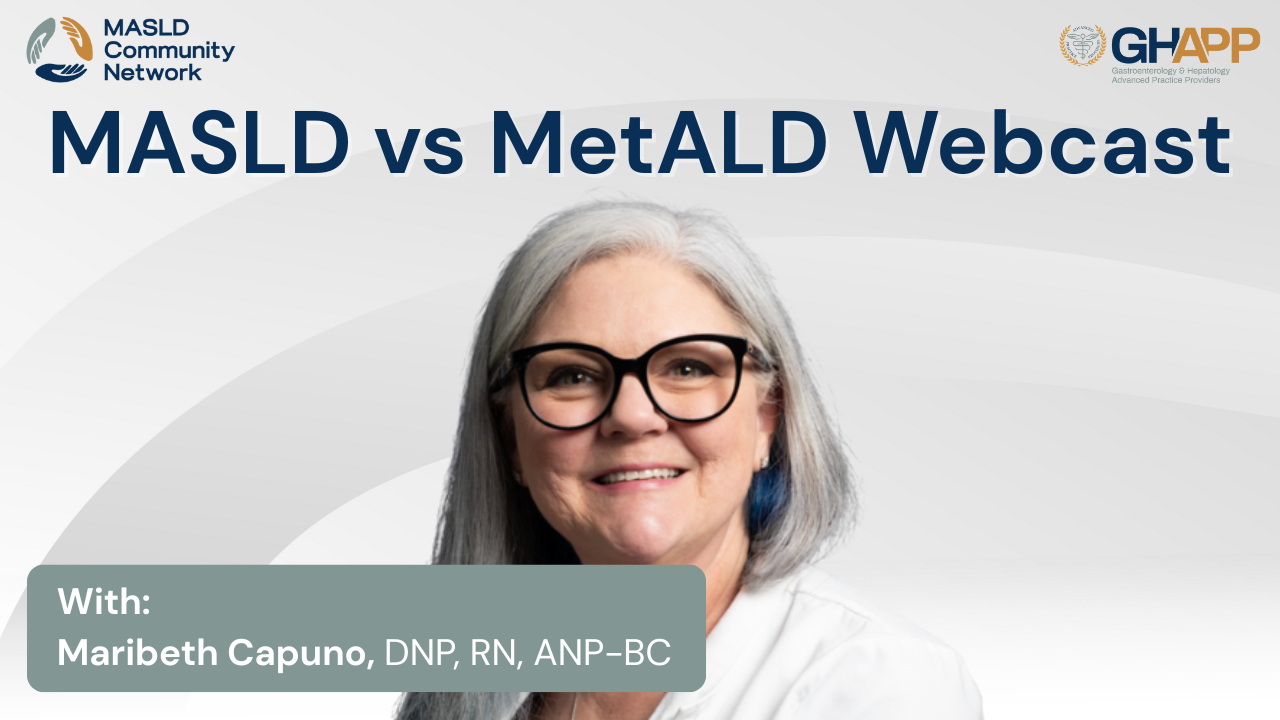
Webcast: MASLD vs MetALD With Maribeth Capuno
September 2025
In this case-based talk from the GHAPP MASLD Community Network, Maribeth Capuno, DNP reviews how to differentiate metabolic dysfunction–associated steatotic liver disease (MASLD) from metabolic dysfunction plus alcohol-associated liver disease (MetALD). Using a 52-year-old patient with ultrasound-confirmed steatosis, metabolic risks (PCOS, hypertension, hyperlipidemia, prediabetes), and daily wine intake, she walks through labs and noninvasive testing—FibroScan 11.4 kPa (F3 fibrosis) and CAP 310 (severe steatosis)—plus an objective PEth biomarker of 120 indicating moderate–heavy alcohol use. The session covers the SLD spectrum, “standard drink” counseling, why questionnaires (AUDIT) and biomarkers (PEth) uncover under-reported alcohol use, and how alcohol synergizes with insulin resistance and dyslipidemia to accelerate fibrosis and decompensation risk. Practical management includes Mediterranean-style nutrition, exercise with 5–10% weight-loss goals, strict alcohol cessation, medication considerations for advanced fibrosis, and HCC surveillance in F3 disease. Ideal for APPs and hepatology clinicians, this video delivers step-by-step evaluation, diagnostic criteria, and clear, patient-education talking points to improve MASLD/MetALD assessment and outcomes.
Watch Now